


Your soft skills define how you work, teach, sell, lead, and learn. You use them in calls, team chats, client meetings, lessons, in feedback, and whenever it gets heated because words matter. Many leaders want to improve their communication, time management, leadership, or conflict-resolution skills, but often find it difficult to practice them in a focused way. Heavy-weight solutions, such as long courses, when you get the feeling that none of them are really hitting home, and we know random tips do less than change behavior.
Mini-courses deal with one learning challenge per session. A quick online course will help you be better prepared for a difficult discussion, provide effective feedback, manage a business meeting, or make your working day more productive. It teaches you a skill and lets you test it in a real-life situation before moving on to the next lesson. Mini-courses are convenient for both learners and course creators in the field of soft skills development.
Soft Skills: Definition and Examples
Soft skills are the personal and interpersonal skills one uses when working with others. Soft skills affect communication, conflict resolution, stress management, adaptability, and information processing.
When presenting your design ideas to a client, you need soft skills. When giving feedback to a student, a teacher requires soft skills. A manager needs soft skills when his team fails to meet its deadline. The entrepreneur will require soft skills when dealing with customer objections.
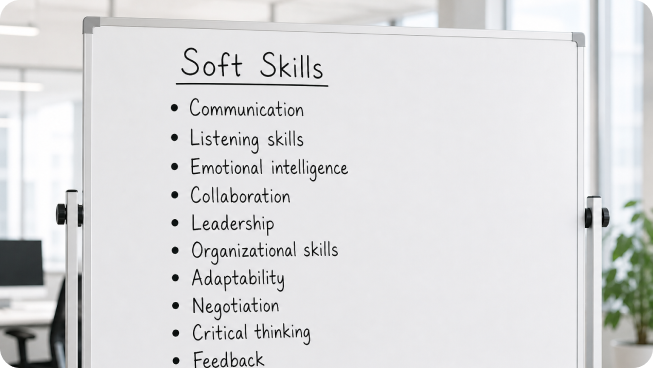
Examples of common soft skills are:
● Communication
● Listening skills
● Emotional intelligence
● Collaboration
● Leadership
● Organizational skills
● Adaptability
● Negotiation
● Critical thinking
● Feedback
Technical skills allow you to get things done, while soft skills enable you to collaborate with others in the process. It is important in online learning, business, and remote work environments, as many challenges arise from unmet expectations, poor listening, and failure to follow up.

Why Mini Courses Help with Soft Skills
You develop soft skills by practicing, analyzing, and receiving feedback. A long training session may provide you with too much theory that is hard to implement. Mini-course gives you only one skill to practice at a time.
For instance, a communication course can cover body language, voice, public speaking, negotiation, writing, feedback giving, and handling conflicts. This list is quite exhaustive for a busy person. With a mini-course, you can concentrate on one single thing, like "learn how to give better feedback in team meetings" or "practice listening without interrupting clients."
Moreover, short trainings easily fit into your day. You spend five minutes watching videos, complete one task, and use the acquired skill immediately in a conversation. Such a quick connection between practice and theory ensures retention.
Also, mini-courses can be used to easily measure progress. For example, you can set yourself the following goals:
● Ask two good questions in your next meeting.
● Summarize a client's concerns before providing a reply.
● Write feedback based on one example.
● Plan your top three activities before lunch.
All soft skills require repetition to develop. One mini-course cannot dramatically improve your skills forever. However, mini-courses in sequence may allow developing one good habit and gradually improving it.
Best Soft Skills to Learn Through Mini Courses
Mini courses work well for soft skills that need practice in small, repeatable situations. These skills give learners fast ways to improve their study and business communication.
Communication
A communication mini-course could assist learners to clarify their ideas, write better messages, and organize their speeches. The best lessons would involve scripts, samples, and brief activities. For instance, learners could practice converting an ambiguous message into a specific request with a deadline.
Active Listening
Active listening enables learners to comprehend the other person's message before responding. Active listening mini courses would focus on one habit at a time, such as asking clarifying questions and summarizing what the other person is saying. This competency benefits coaches, managers, instructors, and support teams that must avoid misunderstandings.
Emotional Intelligence
Emotional intelligence encourages learners to be aware of their emotions and manage them. An emotional intelligence mini course could help learners recognize their feelings, wait before answering, and interpret nonverbal cues from the other party during meetings or class sessions.
Conflict Resolution
Learners can improve their conflict-resolution skills through scenario-based mini-courses. Learners require sample phrases to learn how to remain calm, pose questions, and steer the discussion toward a specific course of action. Scenarios are ideal for conflict-resolution training, as learners should identify effective phrases in each discussion.
Leadership
Leadership skills are well-suited to mini courses, as each lesson could emphasize a specific behavioral trait. Leadership mini-courses could allow learners to practice leading meetings, delegating responsibilities, and offering constructive feedback to their subordinates.
Time Management
A time management mini-course could help learners prioritize and schedule their tasks. Brief exercises could be assigned, for example, to plan their daily activities or analyze one week's missed deadlines.
Presenting Skills
The presenting skills can be improved through regular practice. In a mini-course on presenting skills, topics such as introductions, slides, pace, tone, and handling audience questions could be covered. The learners will present and record a brief presentation.
Collaboration
Mini courses on collaboration will assist the learners in sharing information, assigning duties, and responding to team critiques. Collaboration is very important for remote teams, virtual classrooms, and teamwork.
Step-by-Step Method for Learning Soft Skills Online
The best way to implement the mini course is by taking the training as practice rather than content consumption. Use the following step-by-step guide to get started.
Select one skill
Identify one skill that affects your work environment. Refrain from choosing general goals such as developing leadership skills. Choose a specific skill, such as giving effective feedback, asking better questions, or creating an efficient agenda.
Set one realistic goal.
Apply the skill to a frequent occurrence in your work environment. Example:
"I aim to provide task instructions with fewer clarifying questions."
"I want to maintain emotional stability when talking to an upset client."
"I would like to give my students constructive feedback."
A specific goal will help you pick the relevant mini-course and evaluate your development.
Take one short course.
Find a training focused on your desired skill. Go through the lessons and exercises, and make notes on the expressions or techniques you could incorporate into your routine.
Practicing within 24 hours
Apply the skill as quickly as possible. Write an email using fewer questions. Pose a more difficult question to a client or student. Give constructive criticism using one example.
Regular practice can help you turn theory into action.
Feedback request
Ask another individual, such as a peer, student, supervisor, or someone who is knowledgeable in the field, about the changes that you have made. Examples of direct questions include: "Is my explanation clear?" or "Do I give enough information?"
Repeat for two to four weeks.
Practice makes perfect. Apply the same skill consistently across various contexts. It may take you a week to grasp the concept. Four weeks of practice will allow you to accurately assess your development.
Track one visual result.
Measure some tangible outcome, for instance, reduced misunderstandings, quicker responses, improved meeting minutes, or increased student engagement.

How to Choose the Right Mini Course
A quality mini course provides you with a definite skill, a definite task, and a definite method to assess your performance. Before joining the course, look for the stated objective. It should specify the specific skill you will learn, for example, "handling objections when making sales calls" or "giving feedback in one-on-one meetings."
Look for these course features:
● Short lessons, ideally 5 to 15 minutes
● One main skill per course
● Real examples from work, teaching, or business
● Practice tasks after each lesson
● Quizzes or reflection questions
● Feedback from an instructor, mentor, or peers
● Mobile access for learning between tasks
● A certificate or progress record
● A course creator with field experience
Steer clear of soft skills courses that promise something like "learn to communicate better" or "gain confidence quickly." You need a course that tells you what, when, and how to do things based on feedback.
Tips for course creators and online schools
Mini-courses in soft skills require more than simple videos. The learner must be placed in contexts where he or she can exercise a skill and receive feedback on performance. Each lesson should be built by the course creator around one skill that can be applied immediately upon completion of the lesson.
The following is an example of a mini-course about providing feedback.
● A short video with one feedback model
● An example of poor feedback
● An improved feedback model
● A short writing assignment
● Checklist for self-review
● Reflection questions after the implementation of feedback
Scenarios are very useful in teaching soft skills. An experienced facilitator could demonstrate a difficult interaction with a client, an intense team discussion, an interaction with a student seeking advice, or even a conversation between a manager and an employee who missed the deadline. Such scenarios allow learners to understand how to apply the skill in various situations.
Kwiga can facilitate course creators to develop such an educational strategy through brief lessons, quizzes, assignments, and learning progress tracking.
For course creators, this means each mini course should solve one problem for one type of learner. A narrow promise builds trust and helps learners finish.
What Are the Common Mistakes to Avoid While Improving Soft Skills
The mini courses would be most effective if the participants took action. Many people view lessons and then fail to practice what they learned. Such an approach results in having information but not skills. The list below outlines the behaviors that should be avoided when engaging in mini courses:
● Taking five courses simultaneously
● Selecting wide areas with no particular task
● Viewing videos and not applying the skill
● Neglecting reflection questions
● Doing one practice session and expecting a habit
● Refusing feedback from other people
● Disregarding practical applications at work or the study place
The developers of such courses should avoid making similar mistakes. Any mini-course related to soft skills must require some form of action after each lesson. Participants should be asked to compose a message, record an answer, address a situation, or evaluate their reaction to a real discussion.
Conclusion
Individuals could develop their soft skills by focusing on learning one behavior per course. Mini courses facilitate this process because they are relatively short, focused, and applicable to everyday activities.
It would be wise to select one skill, enroll in one targeted course, use the skill within 24 hours, and request feedback. One can repeat this activity until the behavior becomes natural.
