

Not long ago, the approach to online education was straightforward. An expert would decide to create a course on a particular topic, record it, and sell it as a solution to a particular problem. The approach made a lot of sense. Why not get all the information you could want from someone who is already successful, experienced, and confident?
The approach was successful, at least for a period. The market pace was slower, the pace of skills was slower, and the willingness to watch long, single-voice videos was higher. The promise of a course was to deliver a sense of order in a chaotic world, and many courses indeed managed to deliver this sense of order.
However, the conditions that made this approach so successful are no longer there. The pace of the industry has accelerated so much that it is impossible to keep up with it. The pace of tool development has accelerated so much that best practices become outdated within a few months. The approach of relying on a single perspective, no matter how good it is, cannot deliver this pace.
Moreover, today's learners' approach has changed. They don’t want a hero; they want a solution. They want answers to their questions, diverse perspectives, and information that is constantly updated to reflect the changing reality of the world. When a course depends on a single person's knowledge, time, and opinions, it becomes a highly unstable solution.
That is why the "one expert, one course" approach is coming to an end. It is not because the experts themselves are not good enough; it is because the approach to learning has simply changed.
What Changed in Education and Knowledge Consumption
The biggest change, however, is speed. Skills that used to be useful for many years are now obsolete after a few months. New tools are emerging all the time. The rules vary by platform. The world is adapting to economic changes, regulations, and new tools much faster than any course can be updated.
And yet, how people consume information has also changed. People don’t want to read through a lot of explanation that starts at a theoretical level and ends at some vague motivational level. People want answers they can use immediately. People want examples, context, and evidence that something actually works in real-world conditions.
People’s attention span has also changed. It’s not that people are not interested. It’s that they are efficient. People are comparing courses to real-time content, communities, and conversations. If a course does not help them get ahead quickly, they will not stick around to watch a video or read a blog post.

The next change is access. People are exposed to many experts at one time. People can listen to podcasts, read newsletters, and join social media groups. People can receive many opinions at once. If a course presents one opinion as if it’s the only one that’s right, then they feel like they are not getting enough.
The next change is that outcomes are much more important than credentials. People don’t care who’s teaching. People want to know what they can do after they’ve finished a course. People don’t want to waste time. If a course does not help them develop real skills, they will not stay for very long.
The world has changed from an educational model where you consume knowledge to one where you apply knowledge. And that’s a problem for any model that’s based on one person.
The Limits of a Single Expert
Regardless of how good experts are at what they do, there is only so much that can be accomplished by one individual. Every expert has their own strengths and weaknesses, and what worked in one situation will not work in another. When a course is built around the expertise of a single individual, their limitations become part of the product.
Knowledge also ages faster than personal brands
An expert can create a course full of valuable information, but it can take time and money to keep it up to date. The reality is that many courses have not been updated in years, and the information presented is no longer accurate, at least without the individual realizing it.
Personal bias
Bias is another problem. Experts often teach what worked for them, not what works in general. Their route to success is the framework, even if it is no longer applicable. Without alternative viewpoints, learners cannot see what might not work.
Practical limit
There is also the reality that only so much can be accomplished by a single individual. As more people are reached by the courses they have built, the quality of that support declines. The individual can only do so much. They can only provide so much information and so much support before it becomes overwhelming. They can only provide so much before they become a bottleneck.
None of these problems makes experts less valuable. But learning built on a single voice is slow to adapt and hard to scale.

How Students Actually Learn Now
Today’s learning process is more like a loop. A person will learn something, attempt it, not succeed, and then go back and try again. The process is more circular than linear, with people going back and forth between theory and practice, not learning everything before they start.
Today’s learners also use multiple information sources. They will learn a topic by reading multiple sources and then applying what they have learned. One person will explain the “why” behind a process, another will explain the “how” behind it, and a third will explain how it has failed in real life. Therefore, it’s not possible for one course to provide enough information on a topic by itself.
Another change in the learning process is the involvement of communities. Today’s learners learn by being around people who are only slightly further along in their learning. They learn by asking questions and receiving feedback and information from others. They learn by seeing how others have failed and adapted in their learning process.
Another change in the learning process is that people want to learn only when they have a problem:
-
They want to learn on the go without having to learn everything before they start.
-
They want learning that is bite-sized and not long and drawn out.
-
They want learning that will not become outdated in a week’s time.
Perhaps the most important change in the learning process is that people want learning that evolves over time. They want learning that will provide updates and new examples. They want learning that will not become outdated within a week.
The Rise of Multi-Expert and Modular Models
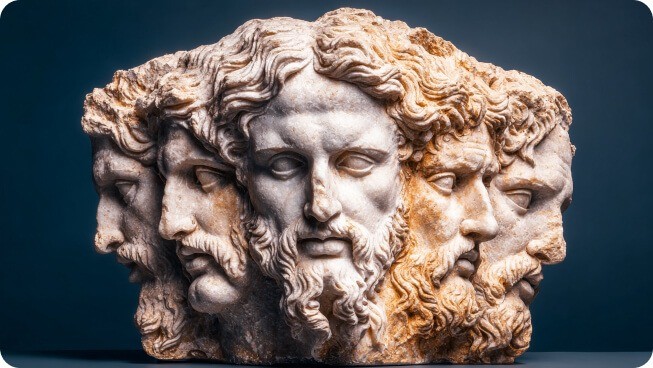
As the nature of learning has evolved, so have the formats. Instead of a sole expert providing the entire course, many courses are now the result of a team. This means each member has contributed an area where they have recent, hands-on experience.
This leads to greater modularity. Instead of an entire course on a single subject, the content is broken into smaller parts that address specific problems. This allows learners to come into the course at different points and review only what they have missed. It also makes the learning process more honest.
The multi-expert model also has the advantage of being easier to update. If a tool or method changes, a specific section can be rewritten without overhauling the entire course.
The multi-expert model also has the advantage of balance. A single expert may hold a particular view on a subject, but a team will have diverse views. This allows the learner to see the different sides and understand the trade-offs.
This does not mean the expertise has been removed; it has been redistributed. Learning has been systematized.

What This Means for Course Creators
For the course creators, this change alters the function they perform. No longer is the emphasis on being the authority figure, but on being the builder of the system of learning. No longer is the question, “What do I know?” but rather, “What does the learner need to know, and who can help me deliver that?”
This can be done by working with others who can assist the learner. This can be done by working with experts or mentors in the field. No longer is the value placed on owning content, but on curating it well.
This also applies to the course's upkeep. The course is no longer a launch-and-done proposition but an evolving product that requires upkeep and iteration. This may require more work, but there is less pressure to be perfect. No longer are the creators of the courses bound by the need to know everything, as the pressure to be the authority figure is removed.
What This Means for Learners
This change will be mostly good news for learners. They will no longer be promised unrealistic goals. Rather, they will be able to build skills from multiple perspectives and adapt quickly to change.
The expectations will also be more reasonable
No one can guarantee to be an expert after completing a course. Today’s learning will be about progress, not transformation. People will be able to build skills and apply them immediately.
The process of choosing courses will also change
Rather than looking for an expert, learners should consider how the course was created. Signals to consider will be having many people work on the course, regular updates, real-life examples, and a community.
The learner will also need to be more self-directed
With modular learning, they can be more flexible. But they will need to identify what they need to solve next.
The learner will not be a passive student. In this new model, they will be an active learner. The value will not be in consuming something.
Practical Tips for Adapting to the New Model
This change is relevant to everyone involved in education. Here are some ways that experts can adjust if they’re leaving solo courses behind:
-
Focus on an area of expertise rather than trying to do everything
-
Work with practitioners who bring new, hands-on experience
-
Consider contributing modules or workshops instead of full courses
-
Update smaller pieces of content more frequently
And here are some ways that experts working on new education products can adjust:
-
Make courses centered on problems instead of topics
-
Make content modular so that it can be easily changed
-
Create feedback loops from learners early on
-
Use many types of lessons, cases, discussions, and practice
-
Think of courses as evolving products rather than static content
And finally, here are some ways that learners can adjust:
-
Identify your problem before buying anything
-
Use many sources of information instead of just one course
-
Look for active communities and frequent updates
-
Use what you’re learning right away, even if it’s small
The idea is that education needs to be flexible because things are changing. The best way for education to happen now is through systems rather than content, and through collaboration rather than isolation.
Conclusion
The days of "one expert, one course" are coming to an end. Learning is now a constantly changing set of skills. There is significant variation in the contexts in which people learn. There is a new value on collaboration, modularity, and constant updates.
But it is best when combined with other views, real-world cases, and feedback. Learning is stronger when it reflects how things are really done. And that is where it becomes useful again.
