

Every week, a new bootcamp shuts its doors; every month, an AI tool generates better JavaScript than the most inept junior developer. The question is repeatedly asked in forums and faculty meetings alike: Will Artificial Intelligence render beginner courses unnecessary?
The fear is valid; ChatGPT can break down loops, create HTML, and debug Python in seconds. Why would you spend 3 weeks learning a structured course when you could have a "helper" assist with your programming?
However, AI will remove the need for poorly designed beginner courses, those that treat humans as slow computers. What is changing is what really beginners need? The types of skills that they are taught. Experts who can adjust to an ever-evolving landscape will provide more valuable and relevant skill sets than previously available.
What AI Actually Does Well
Redesigning beginner courses should start with an honest assessment of what AI excels at today. The current AI models (ChatGPT, Claude, Copilot, etc.) excel in three key areas that help learners:
Explaining a concept in different ways
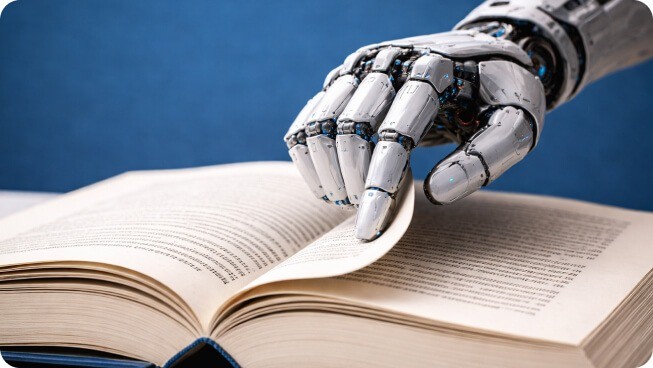
For example, have AI explain a “for loop” as if you were ten years old, provide a technical definition, and relate it to a coffee shop. AI will not become tired of typing up in multiple styles, and it will adjust its style of language used based on your instructions.
Creating unlimited practice problems and exercises
If you need ten different problems for practicing string manipulation, AI will create them for you. If you want them in increasing order of difficulty, AI will create them for you. AI removes the lack of available practice material. A beginner doesn’t need to wait for a textbook full of exercises.
Giving a beginner low-stakes, immediate feedback
If a beginner has written some code that contains errors, AI can identify the error and explain why it is an error and how to fix that code, without passing judgment, so that you will never experience the fear of looking dumb in front of your teacher or peers.
However, AI can only answer based on what you ask for (rather than what you need). AI has no long-term memory for identifying your learning mistakes over a period of weeks.
What Is the Problem with Current Beginner Courses?
Many courses today were made for an AI-free world, but that world is gone. The current point is that they just teach you things that are almost valueless because of what AI can do. Here are three common issues:
Too much focus on memorizing syntax
It takes weeks for students to memorize variable declarations, loop structures, and function definitions. While they are memorizing these archaic rules, AI can handle all of the syntax, so that it doesn't matter. It also doesn't matter for beginners that Java uses "equals()" versus "==" to compare strings. Beginners just need to know that comparing two strings is complicated, and AI will generate the proper syntax to do so.
Isolated and sample solutions
Most of the exercises presented are sample solutions (i.e., reversing a string or calculating the average of three numbers). They are only to help students practice one rule at a time, but are often messy and undefined in real issues. AI will solve any of these sample solutions in under 5 seconds. Investing several hours to solve 5 of these simple problems teaches the student how to perform a single task and nothing more.
Linear and one-size-fits-all schedule
All students start at week 1 and finish at week 12. Fast-paced learners will quickly get bored, and slow-paced learners will quickly fall behind. And the result is that AI can provide each student with a unique learning curve based on their progress. Thus, fixed curriculum courses cannot compete in terms of efficiency in delivering material.
What Comes Out of Beginner Programming Classes
In the end, a beginner programming student leaves class with two things: a weak ability to write simple programs from memory, and absolutely no clue what to do when they run into issues with those simple programs. Students are typically taught an abundance of low-level skills that Artificial Intelligence (AI) can already perform.
The problem is compounded by the fact that students gain an undeserved sense of accomplishment (often referred to as "fake confidence") in their newfound knowledge of programming, only to discover when they begin their first real project that their knowledge was limited to syntax and that they don't actually know how to use the programming language at all.
What Beginners Really Miss Out On?
Beginners do not have good judgment. Beginners do not have a good sense of how to decompose (break down) a poorly defined problem into discrete tasks. And, most importantly, they lack an inherent sense of when and how to test and validate. None of these skills is taught through syntax drills.
What Experts Should Teach Instead
While Artificial Intelligence can facilitate grammar, algorithm, and exercise-based work, experienced human teachers will still have many other aspects to assist their students with. However, this will also require teachers to abandon how we’ve structured our courses over time. In particular, there are five main skills that experienced educators should focus on to help their students perform tasks with technology.
1. How to decompose a problem
AI can recognize a problem, but does not understand how to break down a vague idea.
Be sure to teach students to recognize that additional information is needed in order to execute a solution
-
What type of device is to be used?
-
How is the finished solution to be collected?
-
Who is to collect which portion of the finished solution?
Break down a vague problem into smaller, specific portions with at least five to ten steps.
Identify which portions of the broken-down problem are to be completed first.
2. Testing and Verification
AI is highly confident in its answers, but an inexperienced learner might not always be able to identify errors.
Be sure to teach students to:
-
Create test cases before writing any programming code.
-
Check the validity of an AI-generated answer against relevant, basic test cases.
-
Look for errors in AI explanations (that could provide invalid results).
3. Reading and Debugging Existing Code
AI can create programming code; however, most of an individual's workflow is spent reading, debugging, modifying, and/or enhancing previously written code (as from other individuals or AI).
Be sure to teach students to:
-
Trace the execution path of a section of code without running that code.
-
Utilize print statements and debugging tools to methodically complete tasks.
-
Explain what a piece of code does (versus what the intent was).
4. Improve your question-asking skills (prompting)
If your prompt is poor, you will get a poor answer from the AI. Beginners simply say “fix this code” with no context.
Teach beginners:
-
Provide error messages and expected behavior
-
Ask AI to explain its reasoning, not just give an answer
-
Repeat: “That didn't work; here is what happened, try it again."

5. System behavior mental models
Syntax will eventually fade from your memory as you learn to create mental models of how things operate. A beginner, knowing that a variable is a box with a label, can learn all languages very quickly.
Show the beginner how to:
-
Sketch what happens in your computer’s memory when your code runs
-
Predict the output of the code before running it
-
Explain why the code did not work instead of just how to fix it
Example of changing from one approach to another
Old Approach: “Memorize the list methods in Python and do 20 exercises."
New Approach: “I have a program that does not work; it was written by an AI. Find three bugs, fix them, and then ask the AI to explain why they were bugs."
This is how an expert supports the learner as a thoughtful coach rather than giving them answers.
How to Restructure a Beginner Course
Instructors and those responsible for developing courses will have many options for using AI in the classroom through practical methods.
Change your learning goals
Here is how you can pick another objective.
|
Old objective |
New objective |
|
Write syntax from memory |
Decompose a problem into steps |
|
Complete 20 similar exercises |
Verify and debug AI-generated code |
|
Pass a multiple-choice quiz |
Ask clarifying questions about a vague requirement |
Five ways to redesign your course around AI
-
Start using AI on the first day of class as a partner – Start to show students how to prompt, check, and ask questions to obtain an AI response.
-
Stop having syntax quizzes – For example, ask students before executing code, "What do you think the output will be from the code you wrote?"
-
Your main content can be faulty or AI-generated code – Give students faulty code and require them to find out what the problems are, like in the working world, where they will have to solve problems.
-
Teach students how to debug before they learn how to write – The first part of their two-week course should consist of learning, reading, following, and correcting the code they have written, then writing new code.
-
Grade based on how students arrive at the final result – Students write and provide you with the following: the prompt they submitted to AI, the AI answer received, the results of the verification process, and the corrected result.
Example of before and after with loops
When learning how for and while loops work, examples soon follow by doing three small tasks step-by-step. Then you have ten short challenges to practice with: print numbers 1-10, add values in an array, and each challenge builds your skillset just a little bit more.
As another example of a challenge, you are given an AI-generated faulty loop, and you guess the output before running the code; this shows off-by-one errors to be fixed after discussion. The next step is for you to request 3 AI tests to locate similar issues in future coding. The cycle is complete with the connection of all of the steps. 30 minutes to teach what used to take 3 hours; syntax development is quick. However, error checking/fixing takes longer than ever.
Attention! Most times, tossing in AI basics during a single class changes nothing. It just fades. Weave those ideas into each task instead. Or else, learners will lean on AI to avoid effort, never to sharpen their minds.
Conclusion
Most basic classes won’t vanish because of artificial intelligence. Yet those built on rote repetition? They’ll show their cracks fast. Teachers are stuck drilling grammar rules, even though dictionaries have become outdated. The web already holds every answer they force students to recall.
One way makes sense. Focus on reasoning instead of keystrokes. Stress checking ideas rather than memorized answers. Break challenges down first, skip the formula steps.
Stuck? That’s where learning actually starts. Courses for new learners last only if they show the next move. AI fails at pointing forward in those frozen moments. This single ability matters more than anything else today. Everything else gets sorted by artificial intelligence. Allow it to take care of those tasks.