
Articles:
- Data export to Google Sheets
- Connecting the FB Pixel to a project on Kwiga
- Sending a webhook to transfer data to another service
- Zoom integration and usage essentials
- Generating payment links with pre-filled data
- Handling a button click in the widget
- Sending a webhook to KeyCRM with separation of the application and payment.
- Connecting chat services to a Kwiga project
We will explain where and how you can set up data transfer via webhook on the Kwiga platform.
There are two ways for Kwiga and a third-party service to interact: sending or receiving data.
Receiving data in Kwiga
To receive data from a third-party service, either direct integrations with Kwiga in the required service are used, or data is sent from the service to Kwiga via API.
Example
You want data from an external CRM to be sent to the Kwiga platform. In this case, when a paid application is received in the CRM, you set up data transfer to Kwiga via API. A contact and a paid order will be created in Kwiga, and the customer will get access to the product.
Sending data from Kwiga
If you need to set up data transfer from the Kwiga platform to another service, for example, to send a customer's data to the Leeloo chatbot after registration, then this requires integration of the Leeloo service itself with Kwiga (or any other service to which you want to send data). You can check whether such an integration exists with the support team of the selected service. An alternative to direct integration can be sending webhooks, which allows you to transfer the data you need with some technical knowledge.
You can set up webhook sending on the platform in several places:
- When filling out the application form (the form in the widget)
- When any event occurs through automation
You can use variables to send data. You can find the list of available variables and their names in the article “Using variables in a project, list of available variables.”
Sending a webhook from the widget
Data from the form can be forwarded to a third-party service; you can configure this directly in the CTA using the switch Additionally send data to a third-party service.
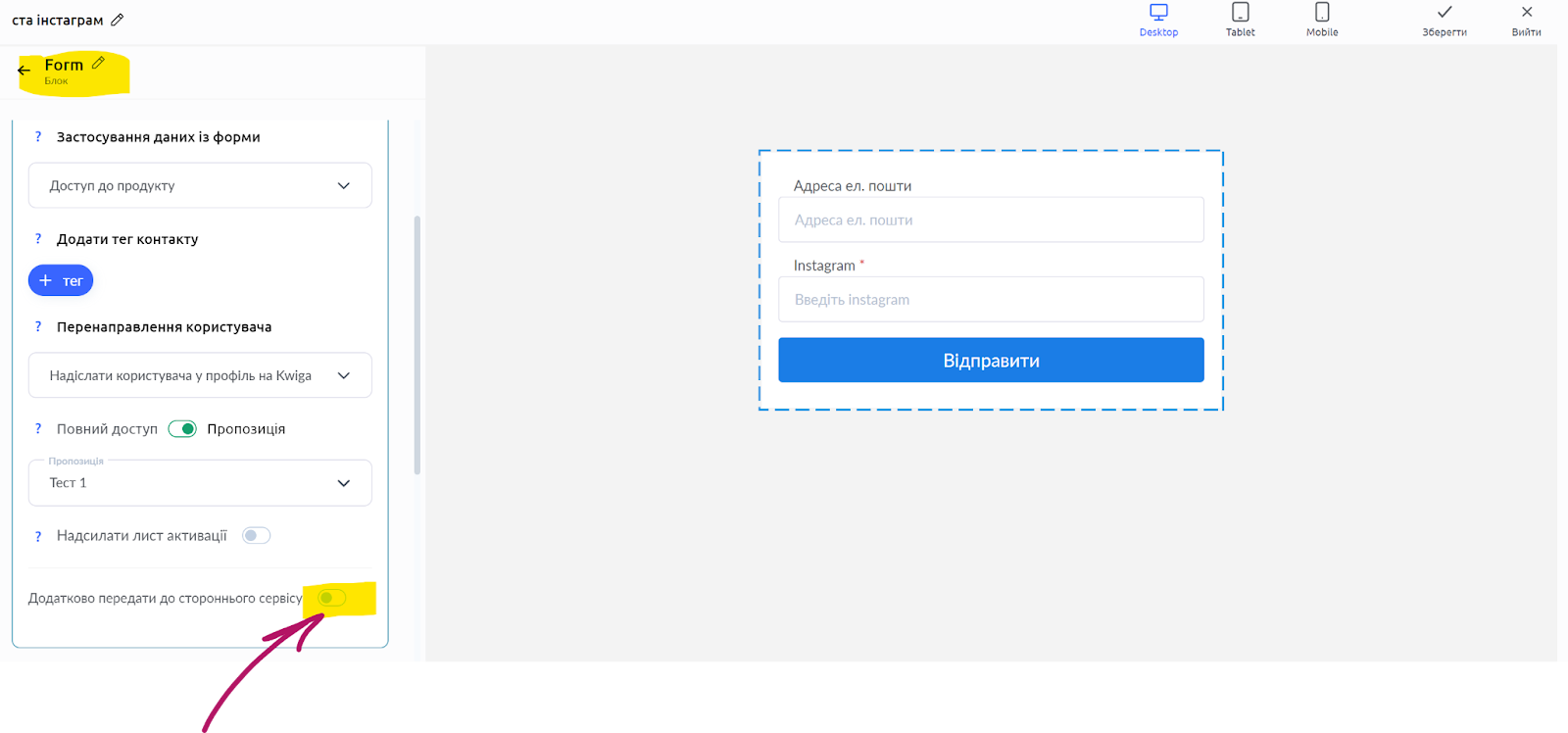
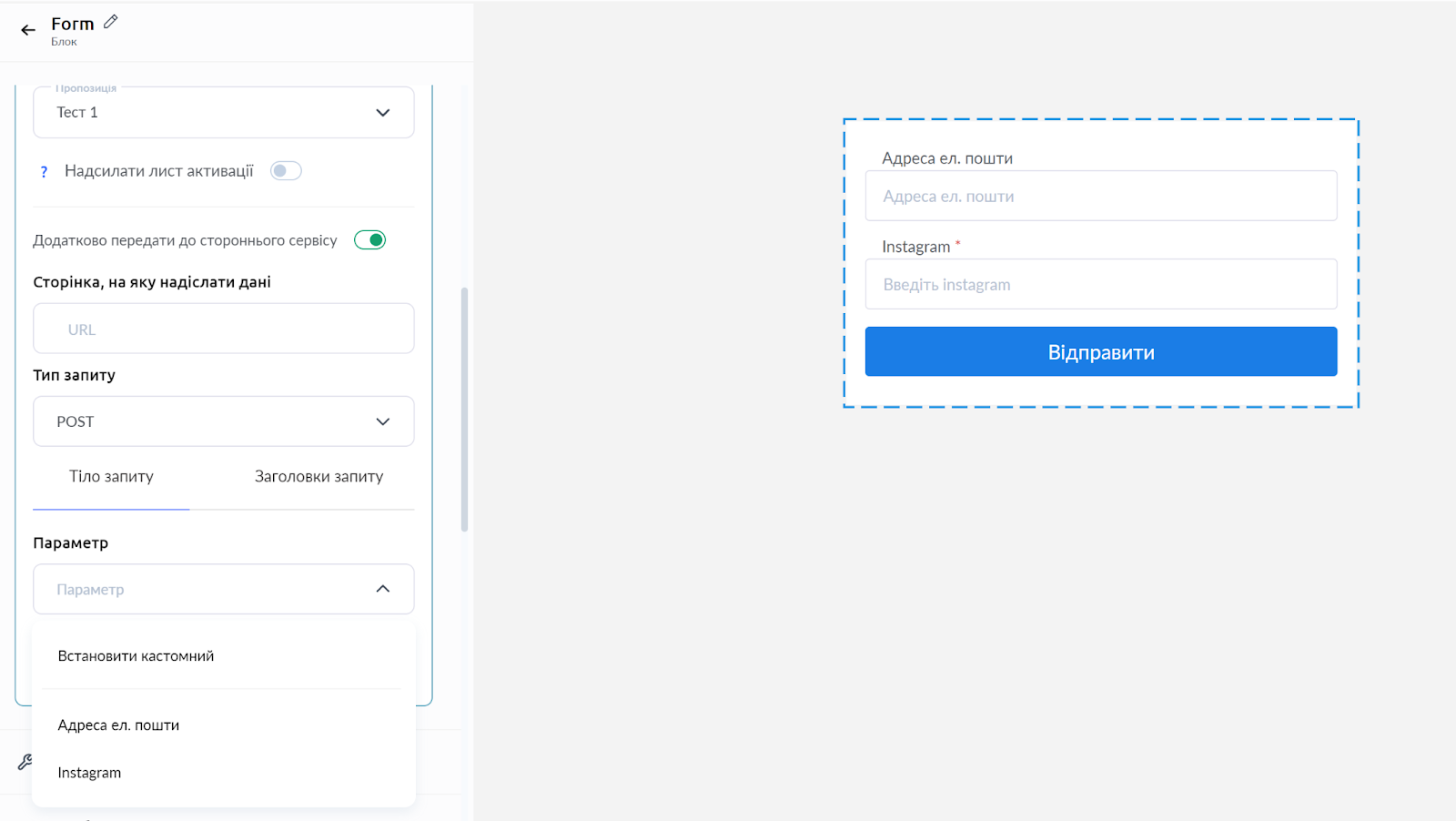
In the form that opens, you can specify the address to send the request to, the request type (POST, GET, PUT are supported), the body and header, and which parameters to send – parameters from the form are available for selection.
Sending a webhook through automation scenarios
In automation actions, there is an item – Webhook – Send data, which allows you to send a request to a third-party service.
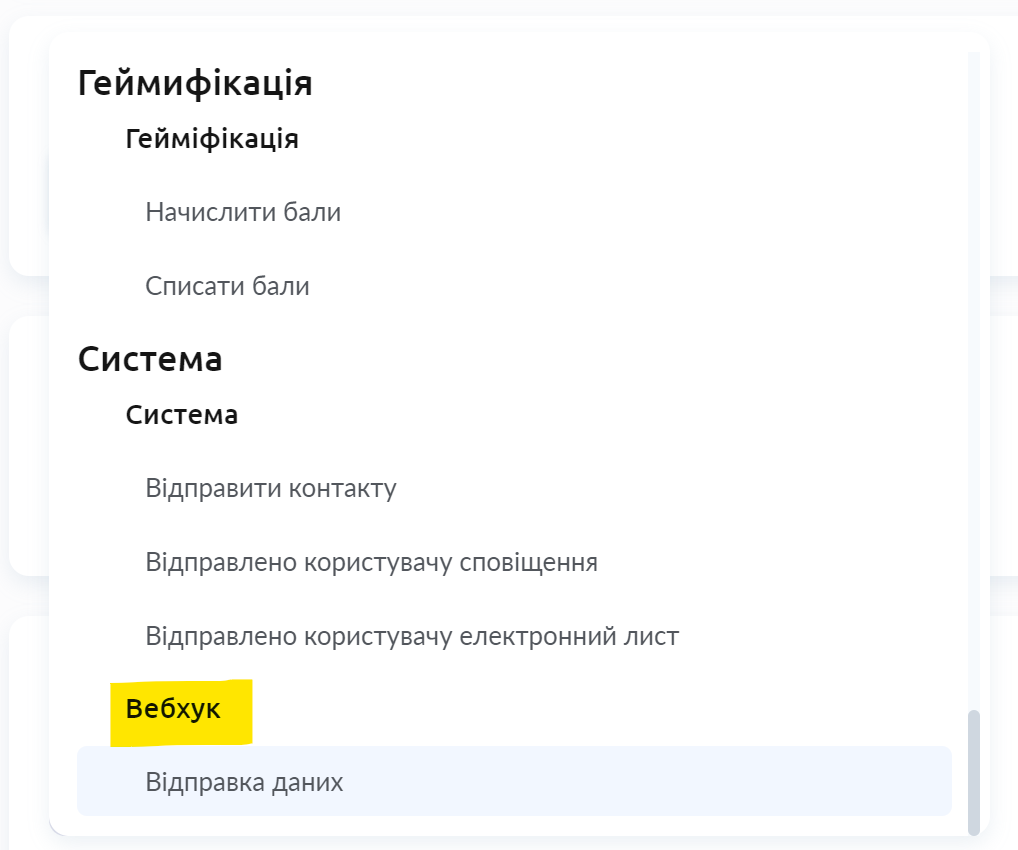
You can configure exactly when data should be sent using events, conditions, and delays in automation; you can find the full list and description on the page General information about automation.
Popular solutions include sending contact data after registration, after payment (successful or unsuccessful), sending data to a chatbot when homework is not completed or, conversely, when assignments are completed.
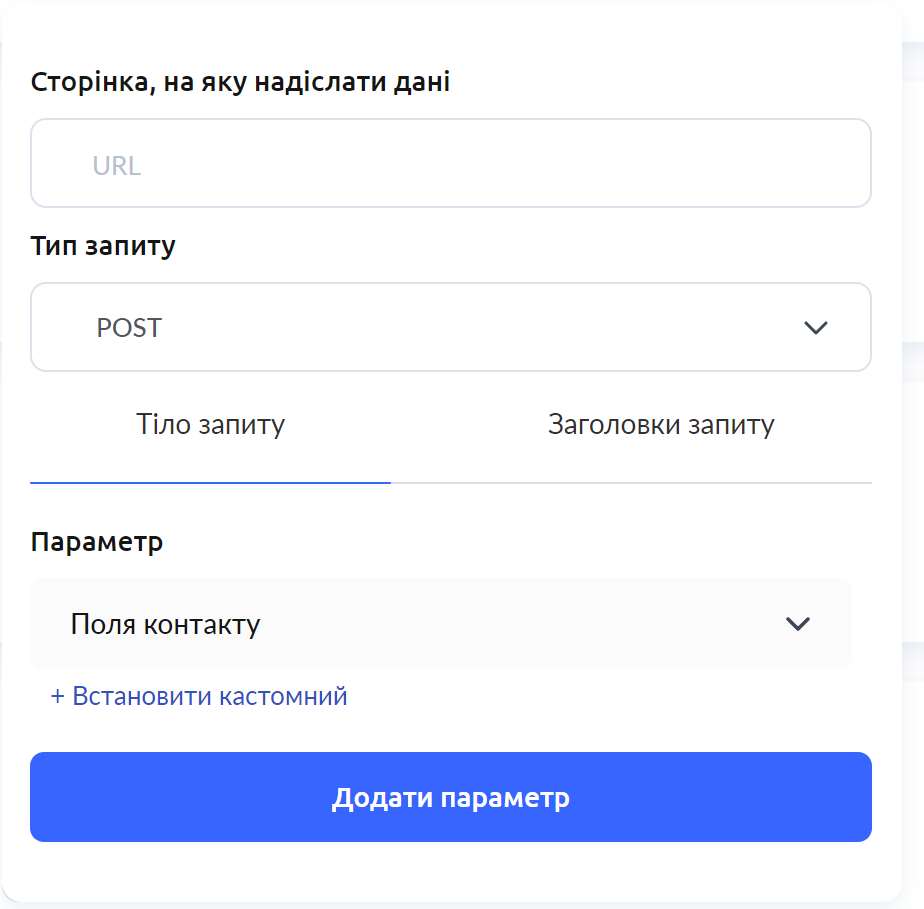
In the form that opens, you can specify the address to send the request to, the request type (POST, GET, PUT are supported), the body and header, and which parameters to send – here you can choose any field in the contact or add your own.
Didn't find the answer? Contact the support service via online chat or Telegram