
Articles:
- Orders: creating and editing orders.
- How do I add an individual payment link to a student
- Transactions
- How to set up sending your own email after purchase
- Integration with the Sendpulse chatbot
- How to integrate a payment system on Kwiga
- How to set a specific language for an offer page
- Important Project Settings
- How to grant access to students if the sales were not made on Kwiga
- Payment without authorization
- How to create a new stream with your own schedule
- How to give access to one student
- How to change access for one student
- How to set up demo access to a course, open house day at the school
- Automation: Follow-up email sequences (unpaid orders and applications)
- Setting up subscriptions (recurring payments)
- Promotional offer
- Credits and installments, payment in parts
- How to launch course registration with prepayment
- Discount coupons and possible settings
- How to create cross-sell offers in Kwiga
- How to start selling on Kwiga: creating a price plan
- Creating multiple pricing plans
- Selling consultations and one-on-one sessions
- How to Change a Student's Plan (Additional Payment on Kwiga)
- How to sell (give access to) parts of the course
- How to implement access renewal sales
- Selling through a registration form on a third-party site
- Selling through a mini-landing page created on Kwiga
- How to add a video to a page (mini-landing, course page)
- How to create a link with an applied coupon
- Offers and Payments on Kwiga: How It Works
- Repeat Sales: Setting Conditions and Sending a Coupon Based on Purchase Count
- Setting up notifications in a Telegram channel
- Sending Emails with Promo Codes (Unpaid Orders)
- Course Store: Settings and Capabilities
- Setting Up the Public Offer Page
- Organization of CPD on Kwiga: step-by-step guide
- How to set up a thank-you page after payment
- Set up access to lessons, sections, and modules
- How to change the contact in an order
- Accept payments through external WayForPay buttons
This guide will explain how to start selling on Kwiga, set up pricing plans for your course, and configure sales directly on the platform. In this article, we will tell you how to do it quickly, easily, and with maximum customization possibilities.
In this article:
- General Information About Sales on Kwiga
- How to Create a Pricing Plan
- Pricing Plan Description and Name
- Which Products Are Included in the Pricing Plan and Under What Access Conditions
- Content Access (Modules, Lessons, Sections)
- Learning: Curators, Practical Assignments, Certificates
- Communication: Access to Comments
- Price, Payment Method, and Purchase Restrictions
- Multiple Prices in One Pricing Plan
- How to Configure Payment Collection
- Additional Sales: Cross-Sell and Order Bump
- Automatic Emails to Students
- Sales Funnel and Pricing Plan Publication
General Information About Sales on Kwiga
On the platform, you can sell courses in different ways: create an unlimited number of pricing plans (for example, sell a course in parts, offer subscription-based access, or provide special conditions for specific plans), as well as offer individual conditions to a particular student.
In this article, we will look at how to create a standard pricing plan.
How to Create a Pricing Plan
There are two ways to create a pricing plan — choose whichever is more convenient for you.
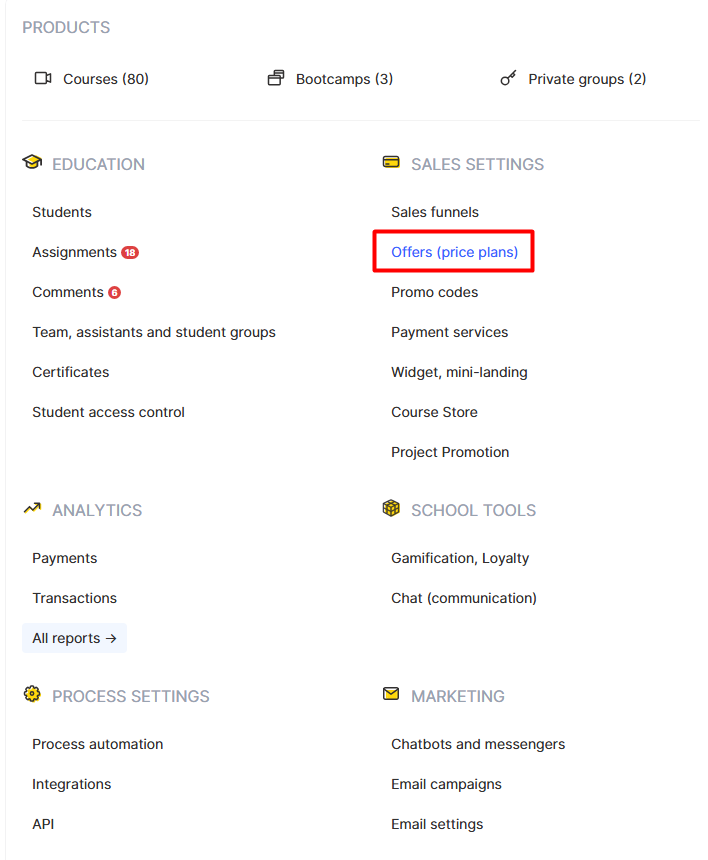
The first method is through the top menu, «Courses». Open it and select Pricing Plans, Offers in the sales settings section.
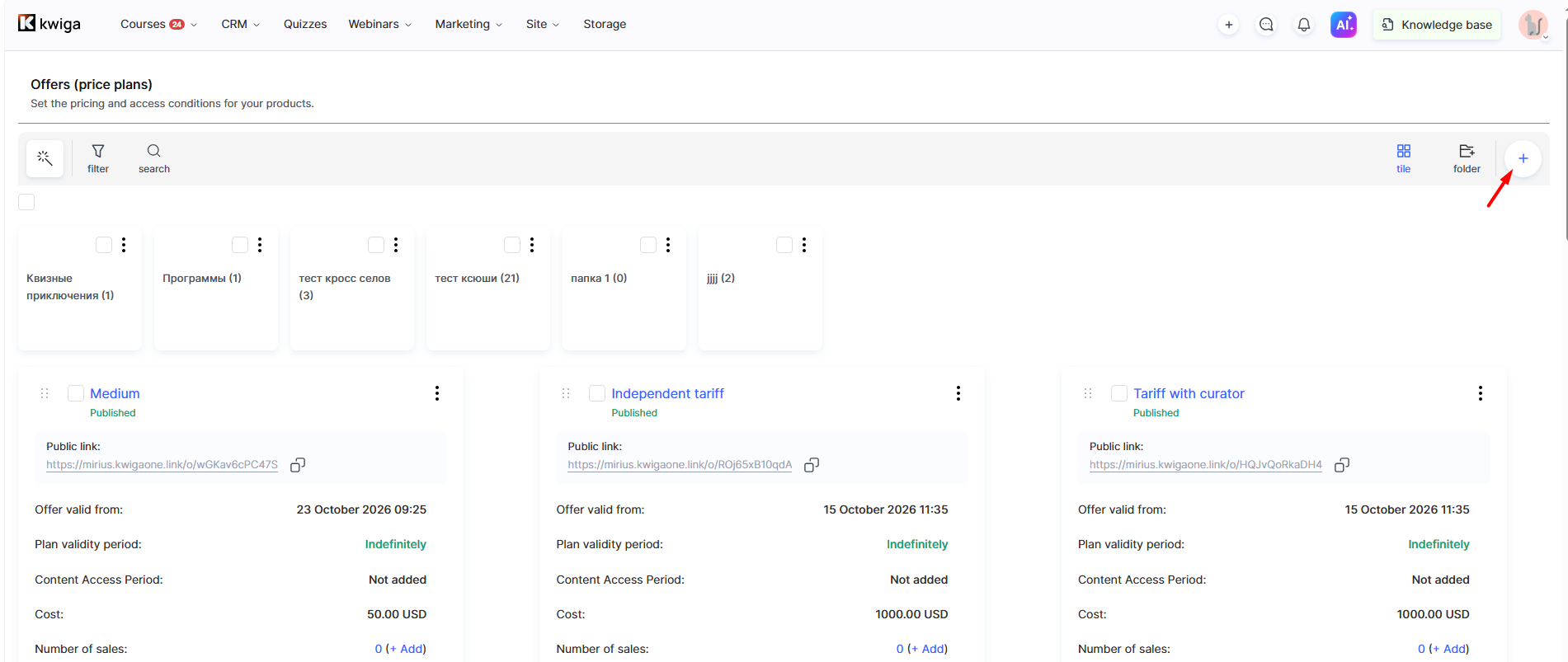
You will see a list of all pricing plans already created on the platform, regardless of which product they are linked to. Click the + button in the upper-right corner to create a new pricing plan.
The second method is directly from the relevant course page. Open the course and go to the Sales menu.
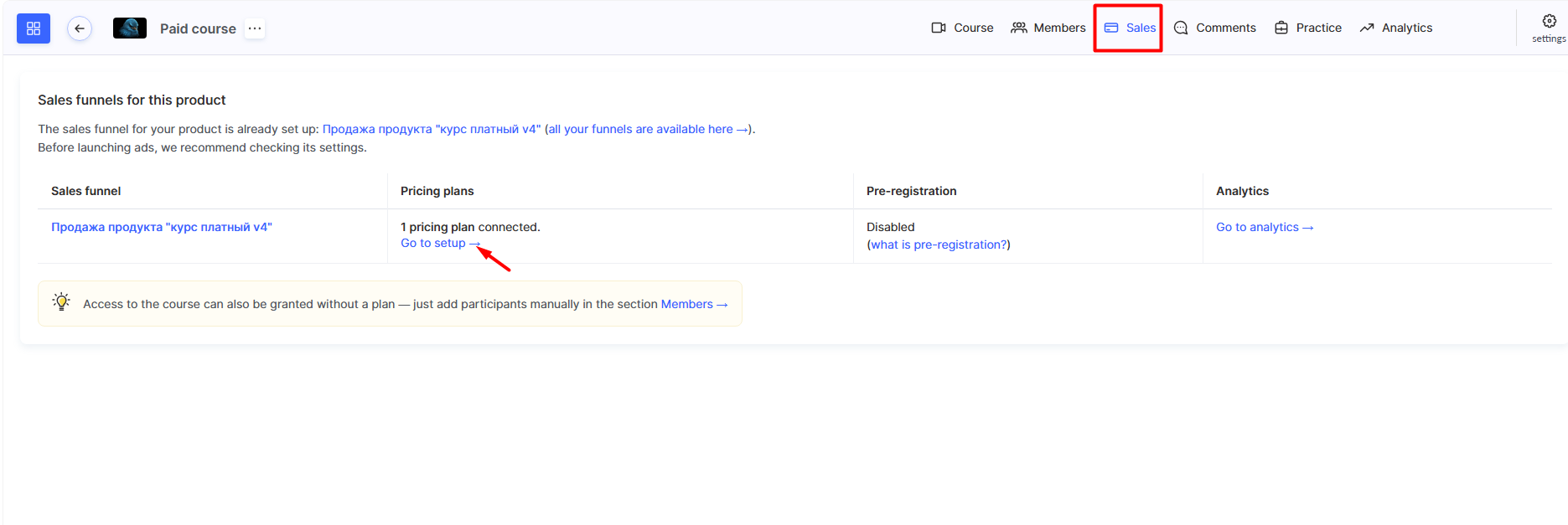
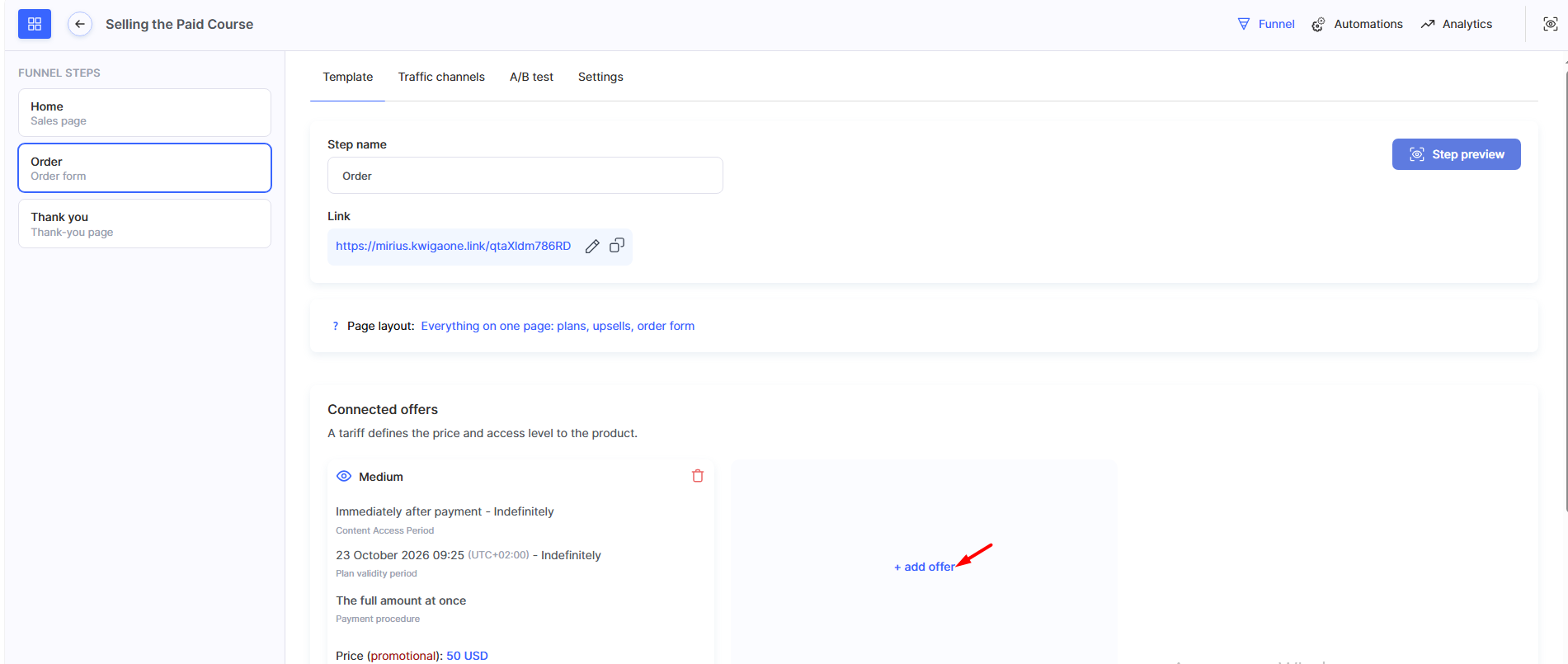
Here, you will immediately see the system funnel that is automatically created for each course. Click Go to Pricing Plan Setup, then — +Add Pricing Plan. This method is convenient if you are already on the course page and want to link a new pricing plan to it without going to the general list.
In the window that opens, enter the pricing plan name and click Create.
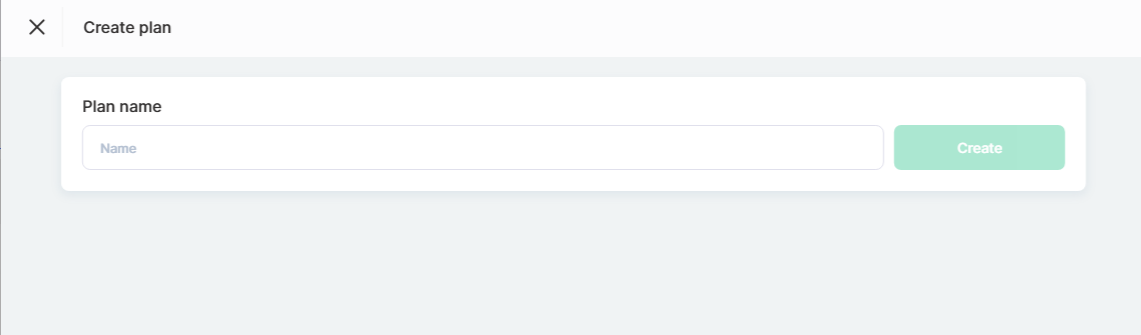
The platform will immediately open the pricing plan editor with several tabs where you can configure all the settings: description, products, price, payment method, additional sales, and publication.
Pricing Plan Description and Name
On the Description tab, you can upload a pricing plan image and specify two names: Name (system) — visible only to you in the admin panel and reports, and Name (client) — displayed to students in emails, on the payment page, and in their personal accounts. By default, both fields contain the same name, but you can change the client-facing name to make it clearer to buyers.
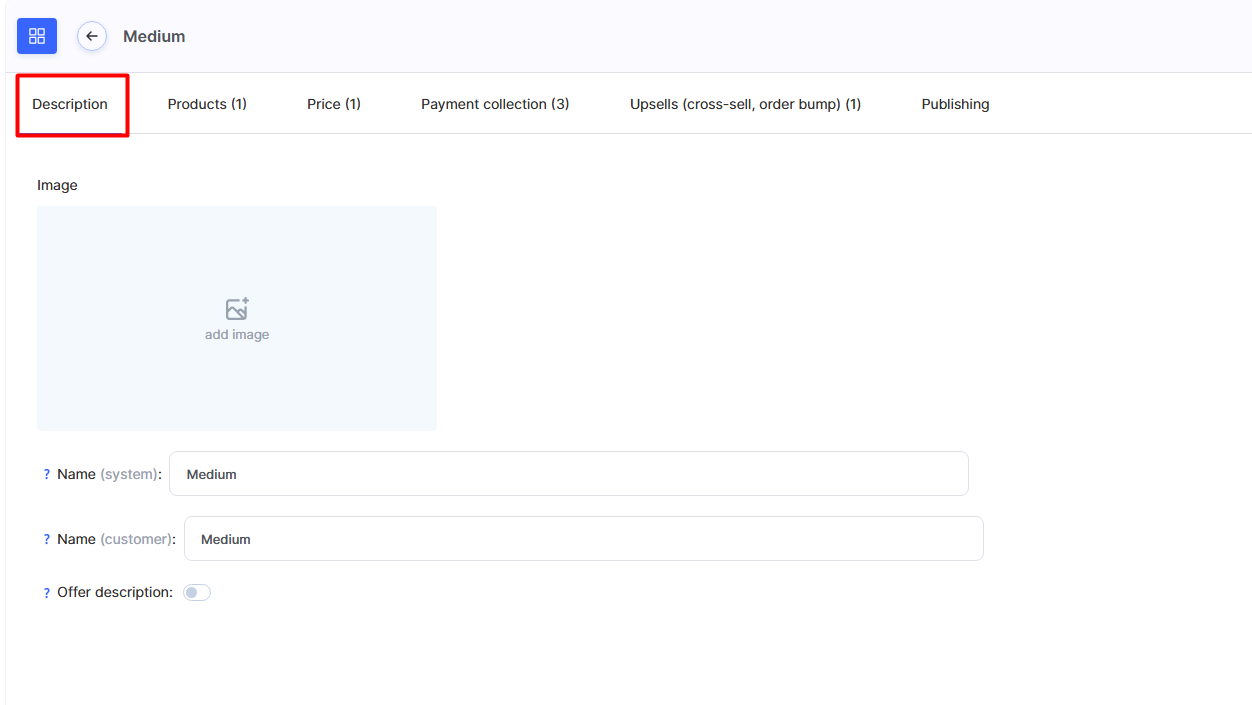
If necessary, enable the Offer Description toggle and add text explaining exactly what students receive when purchasing the plan: which materials they can access, the access duration, and other important details.
In the Display Description field, choose whether to show the full text or initially display a shortened version with an option to expand it, and specify the number of characters in the visible preview.
Which Products Are Included in the Pricing Plan and Under What Access Conditions
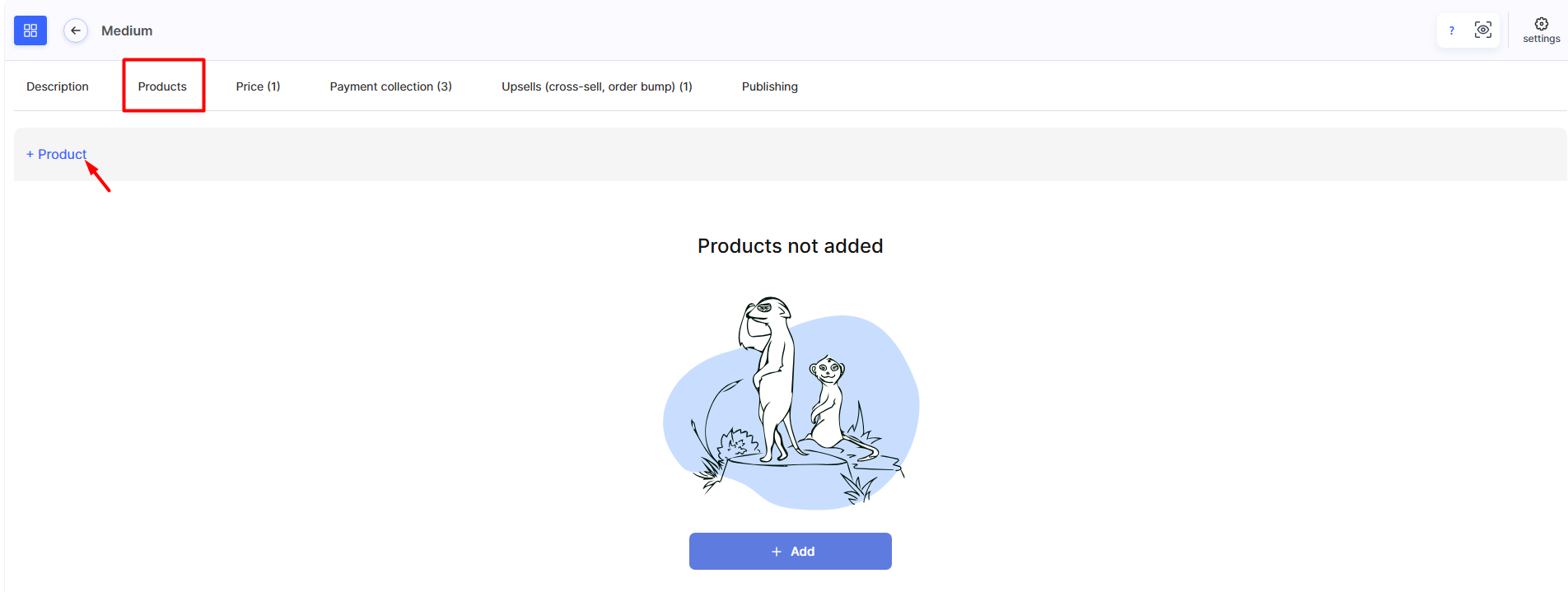
On the Products tab, you can add one or more products that students will be able to access through this pricing plan.
Content Access (Modules, Lessons, Sections)
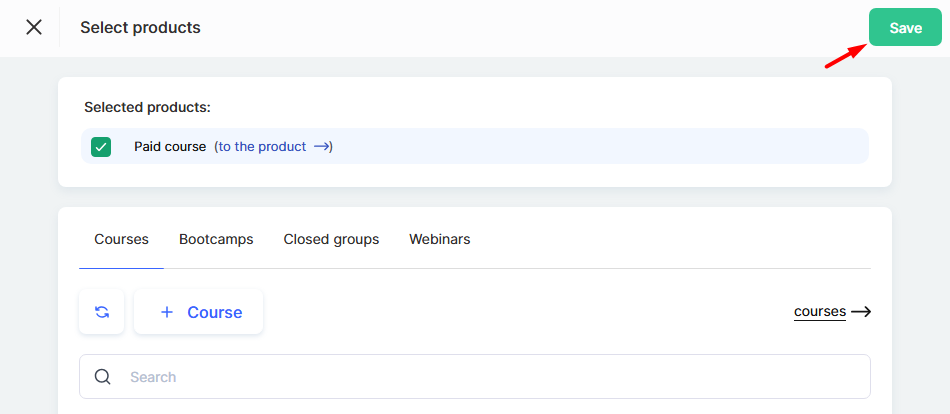
Content Restrictions. By default, students have access to all product content. If you select Specific Modules, Lessons, Sections, visibility settings will appear, allowing you to specify which course elements are included in this pricing plan.
For example, if a course contains 10 modules and the Basic plan should provide access only to the first 3, select those modules from the list.
You can also enable the option Automatically Make New Modules, Lessons, and Sections Available so that all new modules, lessons, and sections added to the course after enabling this option automatically become available to customers who received access through the current offer.
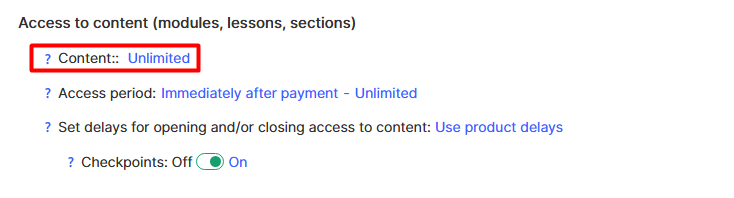
Access Period determines the rules for when access to the product materials begins and ends.
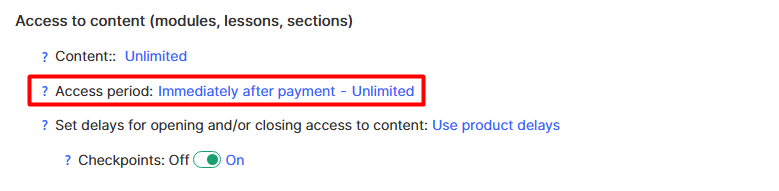
Access Start:
Immediately After Payment means that each student will have their own access start time, based on when their payment is made.
From a Specific Date allows you to specify the exact calendar date, time, and time zone - access will open simultaneously for all students.
N Days/Months After Payment opens access after a specified delay following payment, individually for each student.
On a Specific Day of the Week opens access on the selected day of the week following the week of purchase. For example, if Monday is selected and the purchase is made on Monday of the current week, access will open only on the following Monday.
Access End:
Unlimited means that access to the content has no time limit. For subscriptions, however, access is granted only for the paid period, and if the next payment is not received, access will be automatically blocked.
Until a Specific Date allows you to specify the exact date, time, and time zone when access will be closed.
N Days/Months from the Start of Access automatically closes access after the specified period from the moment access is granted, so each student will have their own access expiration date.
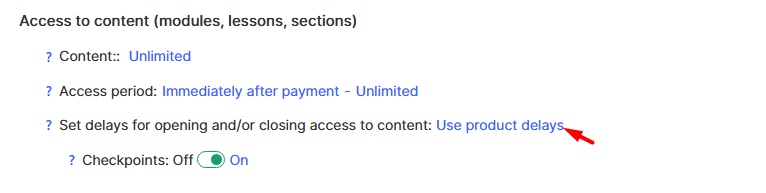
Configure Delays for opening and/or closing access to content allows you to set custom delays for this pricing plan, remove them entirely, or override those configured in the product.
By default, the option Use Product Delays is applied, meaning that delays are taken from the product settings.
Remove All Delays removes all delays configured for the product. Set/Override Delays allows you to configure custom delays for this pricing plan — the product's delays will not apply to students who receive access through this plan.
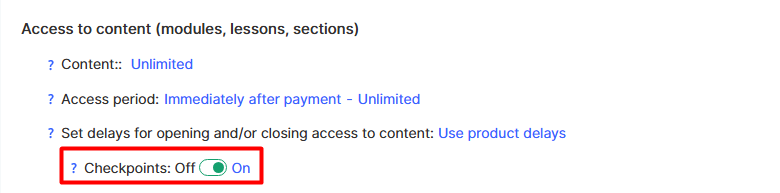
Checkpoints allow you to control course progression and ensure that students gradually master the material. If you want to provide access to all materials regardless of whether practical assignments and tests have been completed, disable this option for the pricing plan.
Learning: Curators, Practical Assignments, Certificates
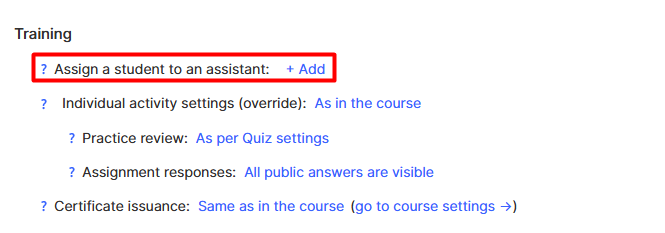
In the Assign Student to Curator field, you can assign students enrolled through this pricing plan to a specific curator or multiple curators so that they are assigned automatically. The Curators group includes users who have been assigned an access group with Curator permissions — either for products in general or individually. Curators can moderate and support participants: manage the product chat, review assignments and tests, and moderate comments.
Custom Configuration (Override) of Activities allows you to select one of the access modes for participants.
As Configured in the Course (default) means that students can access all visible content and practical assignments according to the settings of the course lessons and sections.
Disable All Practical Assignments, Keep Other Content Unchanged preserves access to theoretical content but hides or disables all practical assignments and checkpoints.
Custom Configuration (Override) allows you to manually select which activities — content and practical assignments — will be visible in a specific lesson or section.
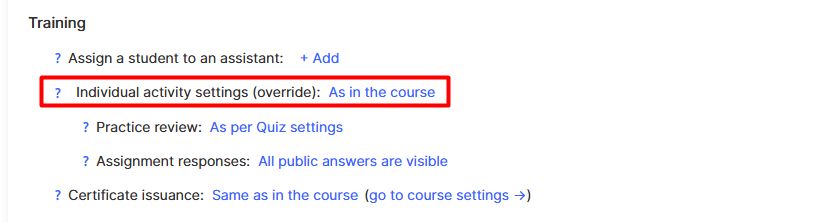
Important! If a participant receives access through multiple pricing plans with different settings, visibility priority applies: if an activity is hidden in one plan but available in another, the student will be able to access it.
Practical Assignment Review allows you to override the assignment approval settings configured directly in the quiz.
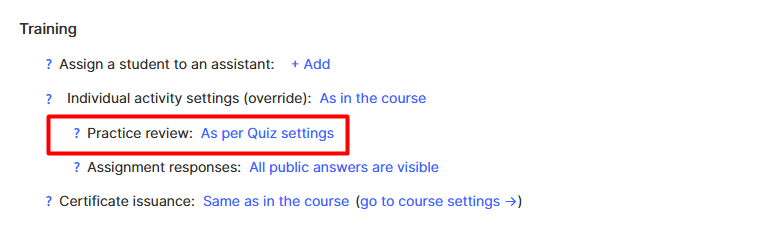
As Specified in Quiz Settings means that the quiz's own settings will be used.
Automatic Review enables automatic approval for students enrolled through this pricing plan, even if the quiz requires mandatory curator review — the quiz will be considered successfully completed even with 0% correct answers.
Mandatory Curator Review, on the other hand, requires the curator to review the assignment even if automatic approval is enabled in the quiz.
Assignment Answers determine the visibility of students' public answers.
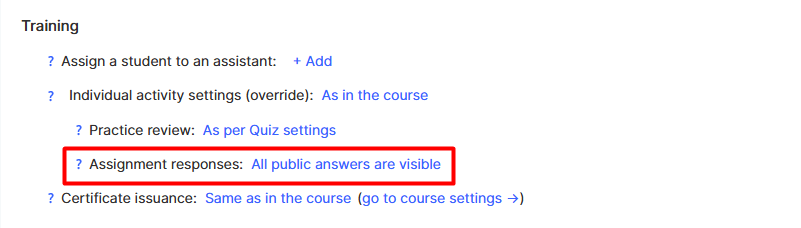
All Public Answers Are Visible allows students to make their answers visible either only to the curator or to all authorized course participants.
Public Answers from Participants of the Current Pricing Plan Are Visible displays public answers only from students who received access through the same pricing plan.
No Access to Public Answers hides all public answers - students can submit only private answers to the curator.
Certificate Issuance allows you to configure certificate issuance for the current pricing plan.
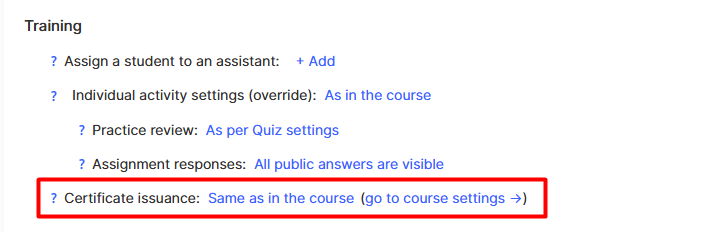
As Configured in the Course means that the certificate is issued according to the course settings.
Do Not Issue means that even if a certificate has been uploaded to the course, it will not be issued to students enrolled through this pricing plan.
Override allows you to change the certificate itself and its delivery settings.
Communication: Access to Comments
Access to Comments determines which comments students enrolled through this pricing plan can see.
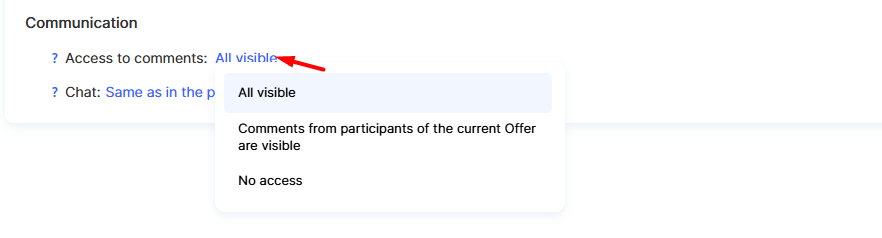
No Access completely disables access to comments.
All Comments Are Visible displays all comments, including those from students who received access through other pricing plans.
Comments from Participants of the Current Pricing Plan Are Visible displays only comments from students who received access through this specific pricing plan - this option allows you to separate comments between different student groups.
Price, Payment Method, and Purchase Restrictions
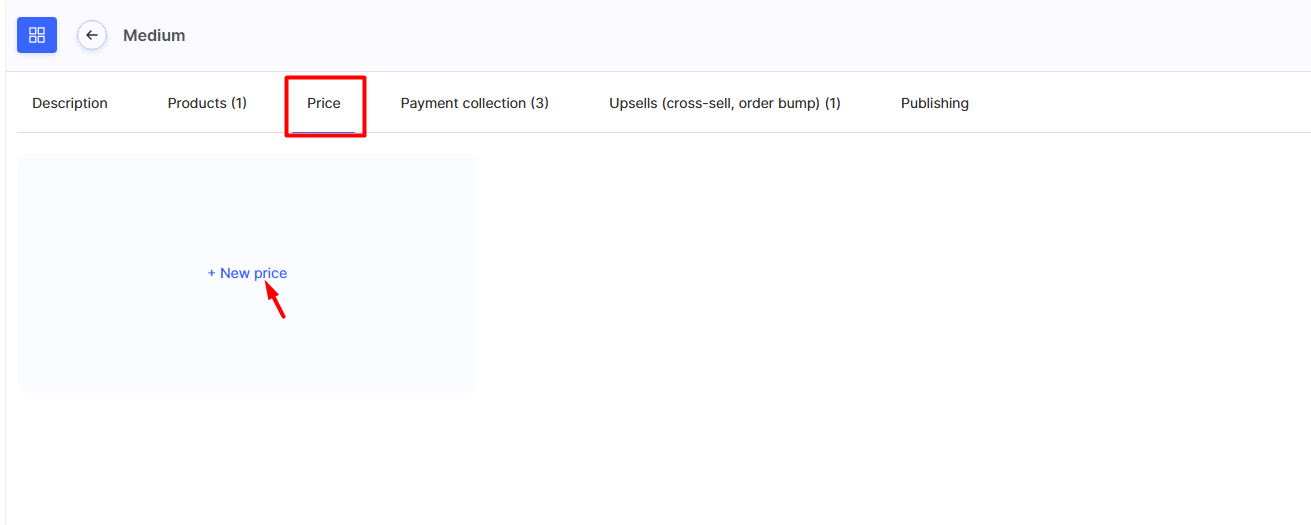
Each pricing plan can contain one or more prices that students will see on the order page. Adding a new price and editing an existing one are done in the same window: for a new price, the fields will be empty, while for an existing price, they will contain the current values.
After making changes, be sure to click Save; otherwise, the changes will not be applied.
The Price Is Active toggle determines whether students can see this price on the order page. If you disable this option, the price will remain in the system but will no longer be available for payment. This is useful when you need to temporarily hide an offer without deleting it.
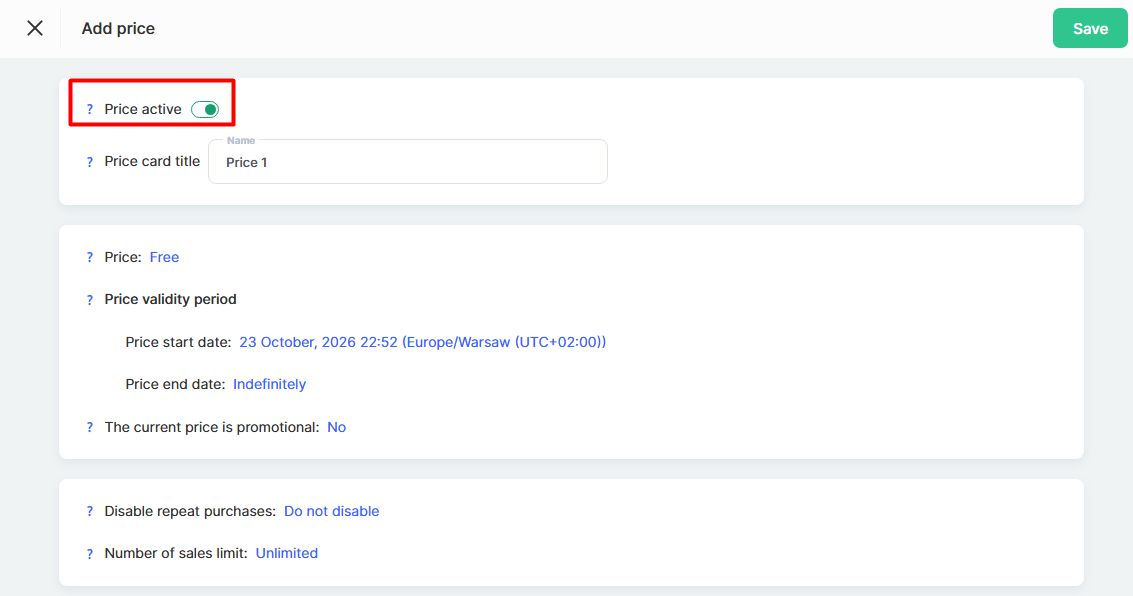
In the Price Card Name field, enter a name that only you can see in the admin panel. It helps distinguish between different prices if the pricing plan contains several of them. This name is not displayed to customers.
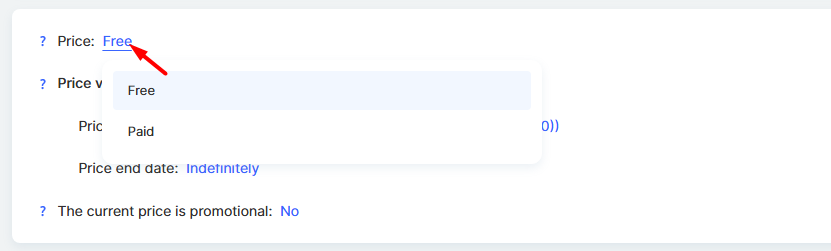
In the Price section, you can set the cost — either free or a specific amount.
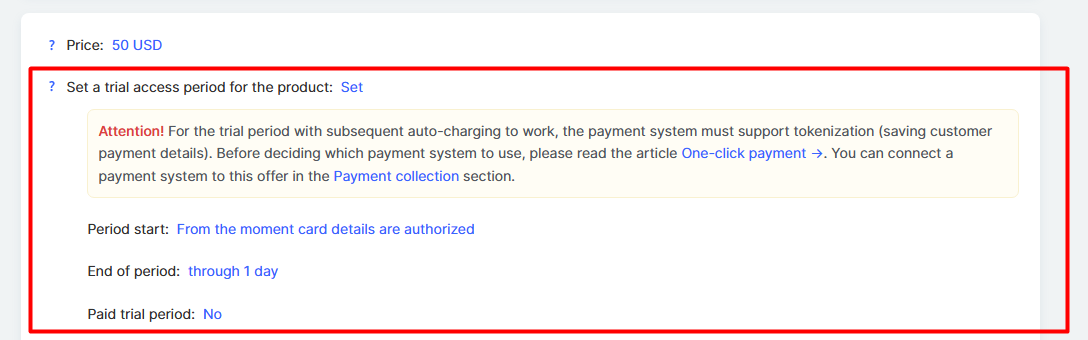
If you plan to Set a Trial Period, keep in mind that students will need to enter their payment card details before the trial begins. The availability of a trial period depends on the connected payment system: it must support either card verification without charging, followed by token creation, or token creation after the first payment. If the payment system supports neither option, the trial period will be ignored and the full amount will be charged immediately.
Price Validity Period is the period during which this particular price will be displayed on the order page. It is important not to confuse this period with the student's access duration for the product — these two settings are independent of each other. Here, you can specify the price start date and, if necessary, the end date, or leave the price valid indefinitely.
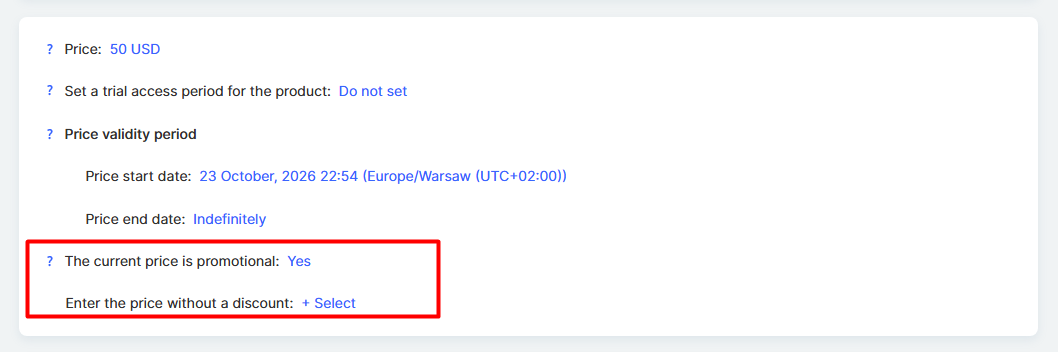
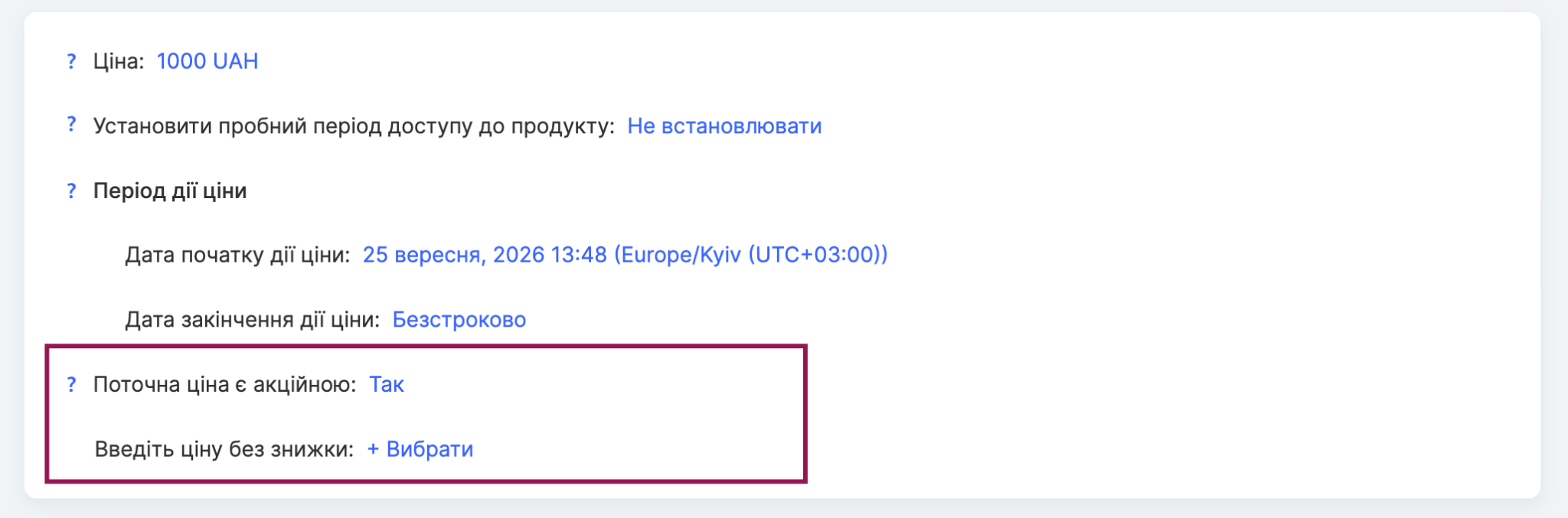
If you enable the Current Price Is Promotional option, the price will be marked as discounted: students will see the original price crossed out alongside the current discounted price. You can enter any value as the original price or use an existing price from the same pricing plan — the platform will insert it automatically. There is no limit to the number of promotional prices within a single pricing plan. The promotion will automatically end as soon as either of the two limits is reached — the validity period or the number of purchases.
If an end date is specified for the price, you can also enable the Price Countdown Timer — a timer will then appear on the offer page, counting down the time until the price expires. This is particularly useful for promotional offers when you want to visually emphasize their limited availability.
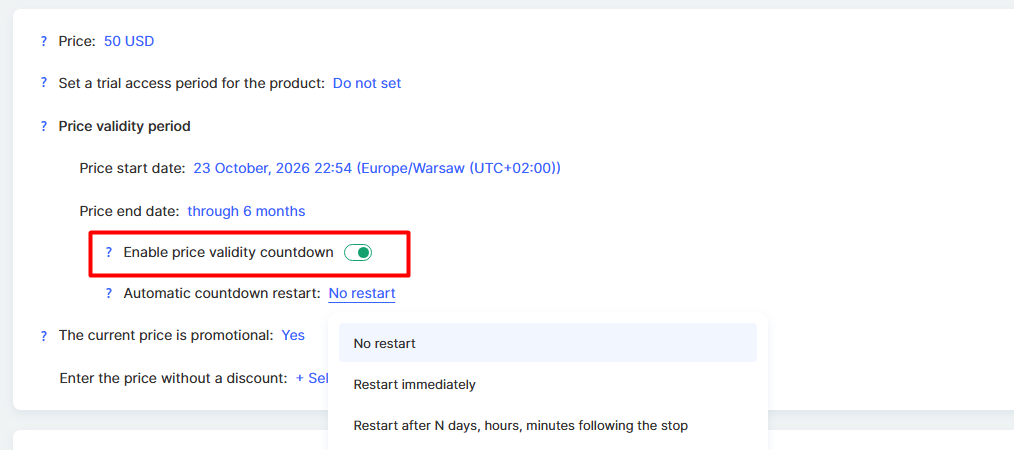
Along with the timer, you can configure what happens to the price after its validity period ends using the Automatic Price Restart option.
No Restart means that the price will no longer be displayed to any students once its validity period expires.
Restart Immediately starts an endless cycle: as soon as the countdown reaches zero, the timer starts again.
Restart N Days/Hours/Minutes After Stopping means that the next cycle will begin after the specified interval following the end of the previous one. Until the restart, the price will remain hidden.
Note: If one of the restart options is selected, two additional settings become available. «Stop Restarts» allows you to limit the total number of cycles, for example, to 5 out of 50 possible cycles, after which the price will no longer restart. «Hide Restarts from Existing Students» displays the price in each new cycle only to new participants — students who have already seen this price will not see it during subsequent restarts.
Payment Schedule determines how students will pay for their purchases.
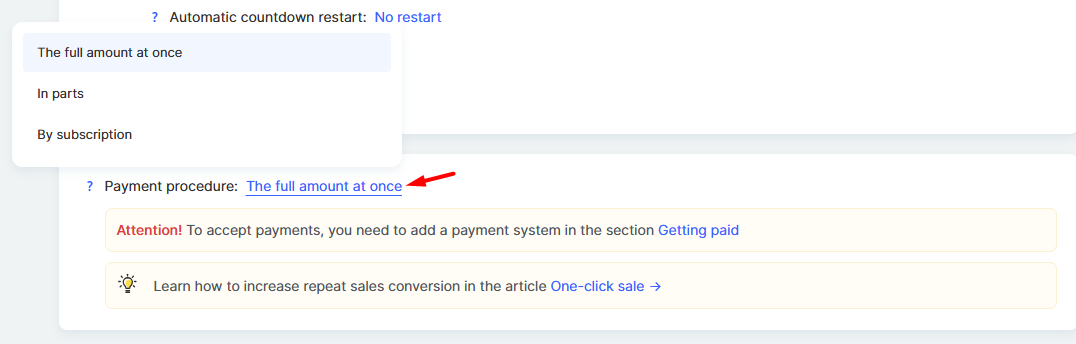
By default, the Full Amount at Once option is selected, meaning that students pay the full price in a single payment.
Subscription allows you to configure recurring payment intervals: access to the content is automatically extended after each successful payment, and if a payment is delayed, access is closed. Students can cancel their subscriptions independently in their
Personal Account — a Cancel Subscription button appears there for products purchased through a subscription.
Installment Payments allow you to split the total amount into several payments — either equal installments at regular intervals or custom amounts with flexible intervals between payments.
Prevent Repeat Purchases applies to the entire pricing plan rather than an individual price.
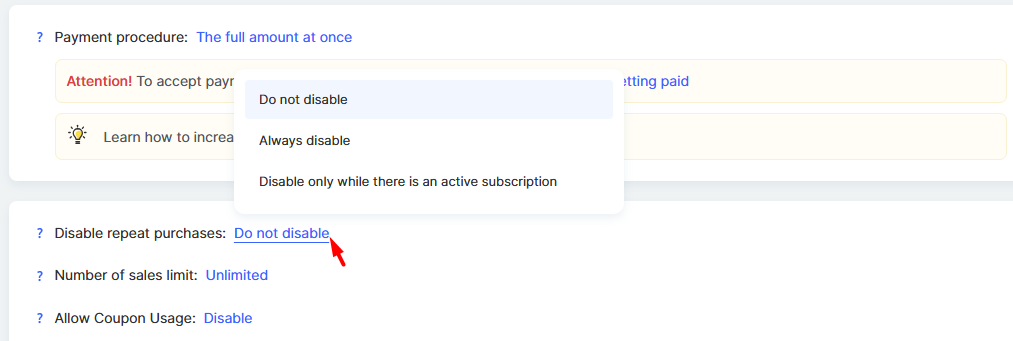
Do Not Restrict means that students can always purchase the offer again. Always Restrict prevents the same student from making a repeat purchase, regardless of the status of their previous subscription.
Restrict Only If There Is an Active Subscription blocks repeat payments only while the student has at least one active subscription under this pricing plan.
Sales Quantity Limit sets a sales limit for a specific price. Once this limit is reached, students will no longer be able to purchase the offer at that price.
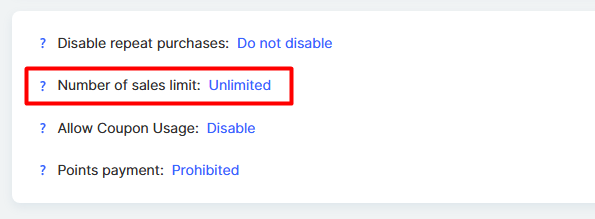
Important! Keep in mind that this restriction applies only to payments made independently by students. You can still grant access manually, even after the sales limit has been reached.
On the public offer page, you can allow or prohibit the use of discount coupons.
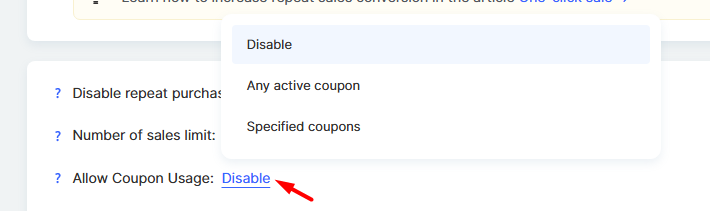
Prohibit All Coupon Use completely removes the coupon entry field.
Any Active Coupon allows students to apply any active coupon from the list. Selected Coupons allows only the coupons you specifically select for this price to be applied.
Earned Points can be used as the platform's internal currency.
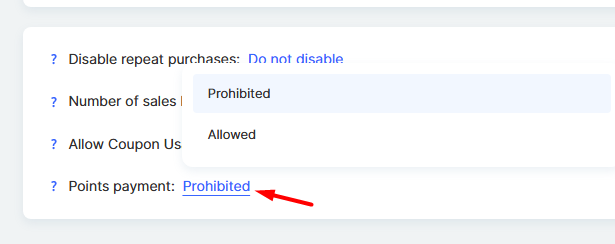
The Allow Payment with Points option allows students to pay for their purchases partially or fully using points at an exchange rate you set yourself. Learn more about earning and redeeming points in the article about gamification.
Note: To accept payments, you must add a payment system on the Payment Collection tab. Otherwise, the platform will display a warning that the pricing plan is free.
Multiple Prices in One Pricing Plan
You can create several prices within a single pricing plan and configure their validity periods so that they automatically replace one another. For example, students may initially have access to an early-bird price, which will automatically change to the regular price at the specified time — without any action required on your part.
To add another price, click +New Price in the Price section. When creating a new price, the platform will offer to copy the settings from an existing price or leave the default settings. This is convenient if the new price differs by only one or two parameters. For example, set a price of UAH 500 for the period from the 1st to the 10th of the month, and UAH 700 starting from the 11th. The second price will automatically take effect as soon as the first one expires.
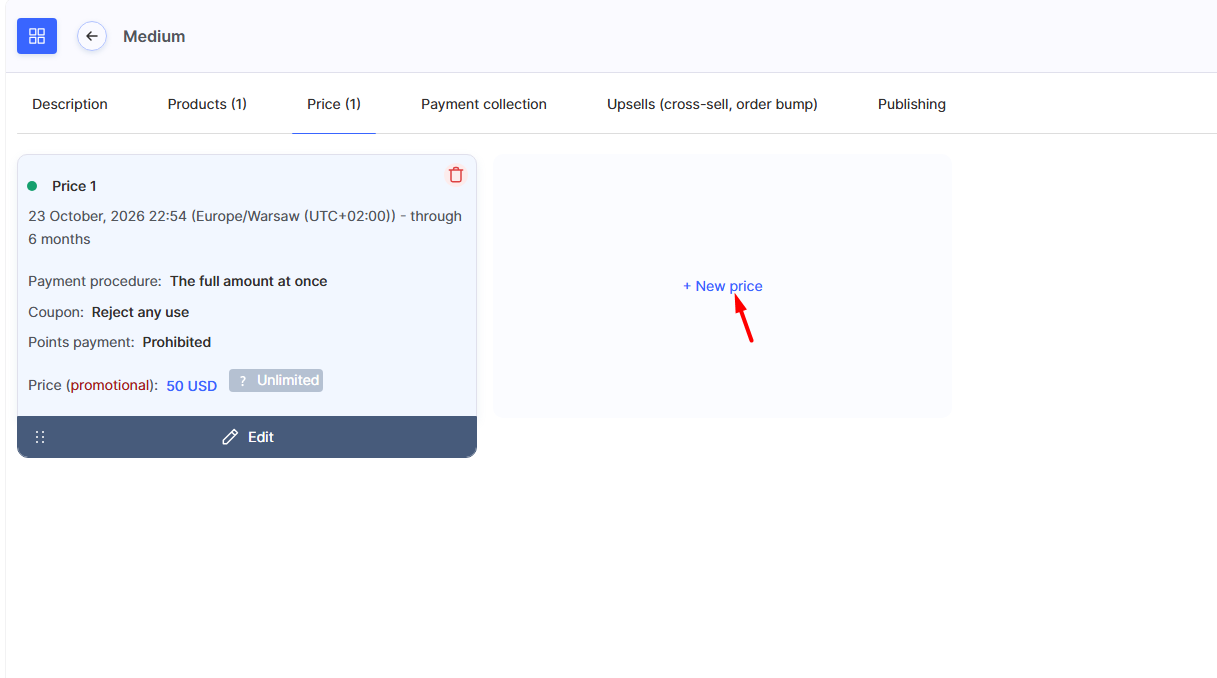
Start and end dates are configured separately for each price. To ensure that prices replace one another without interruption, simply set the end date of one price and the start date of the next with no gap between them. If the validity periods of two prices overlap, the platform will display a price timeline — a visual scale showing which prices are active at any given time — and prompt you to choose which price students should see during the overlapping period.
How to Configure Payment Collection
On the Payment Collection tab, you need to Select a Payment System through which you will accept payments for this pricing plan.
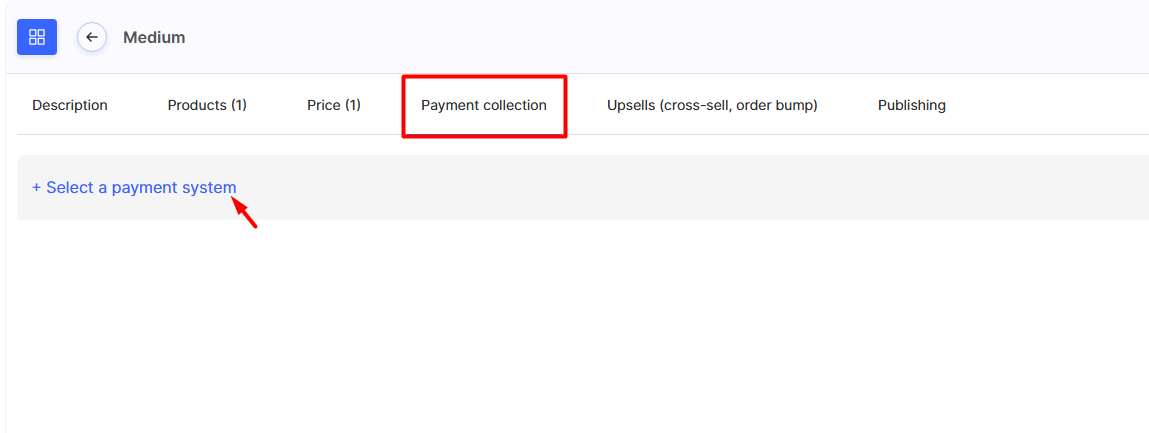
Remember that Kwiga is not a payment system. Therefore, to ensure that students receive access automatically, you must connect a payment system in advance. For more information, see the article How to Integrate a Payment System on Kwiga
If the pricing plan price has not yet been set or is equal to zero, the platform will display a warning that the current pricing plan is free and suggest setting a price greater than zero on the Price tab first.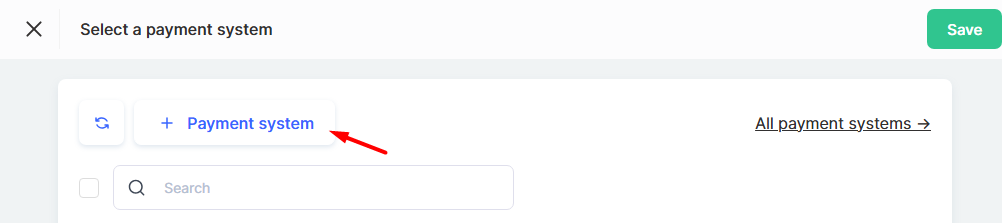
Click +Payment System, to add one of the connected payment systems, or follow the All Payment Systems link to view the complete list and connect a new one if necessary.
If several payment systems or multiple accounts within the same system are added to the pricing plan, you can configure automatic payment distribution between them based on percentages or allow students to choose their preferred payment method on the order page.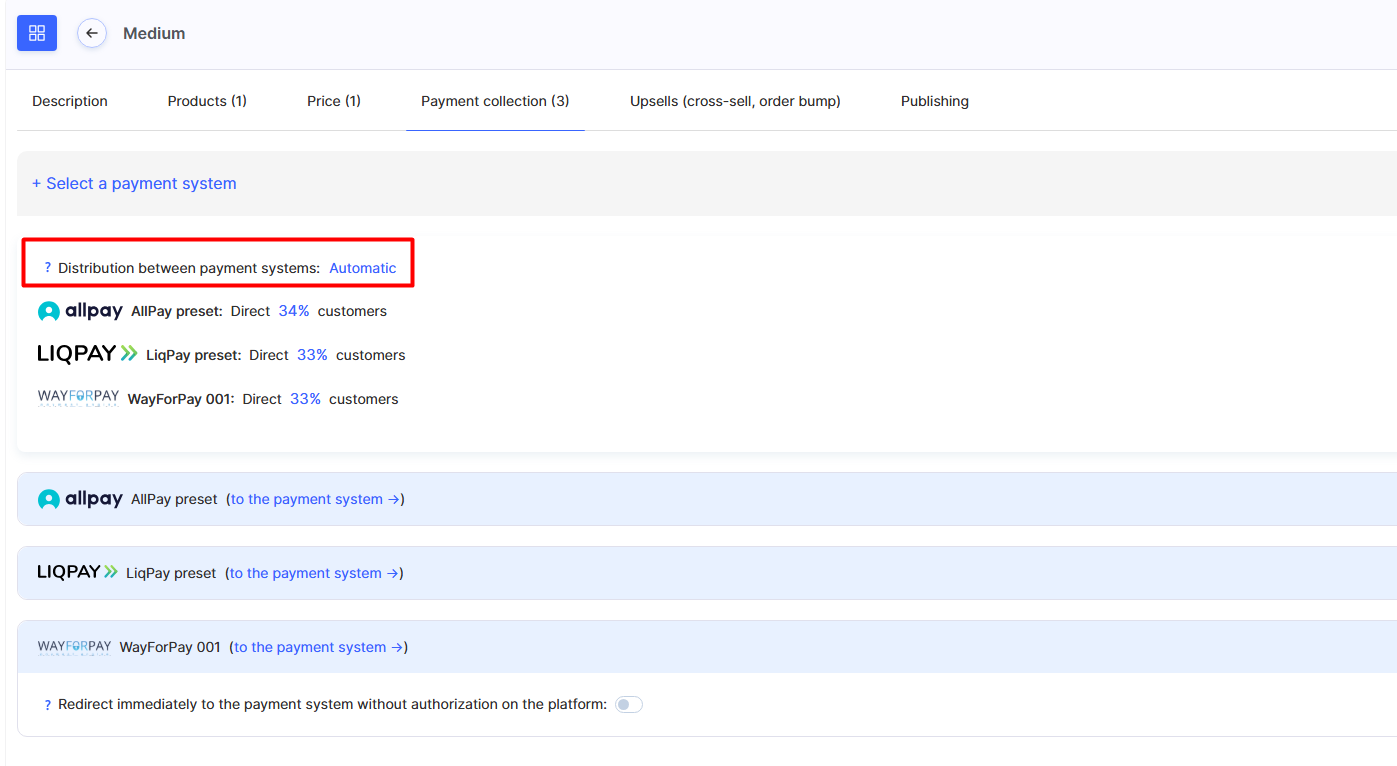
Additional Sales: Cross-Sell and Order Bump
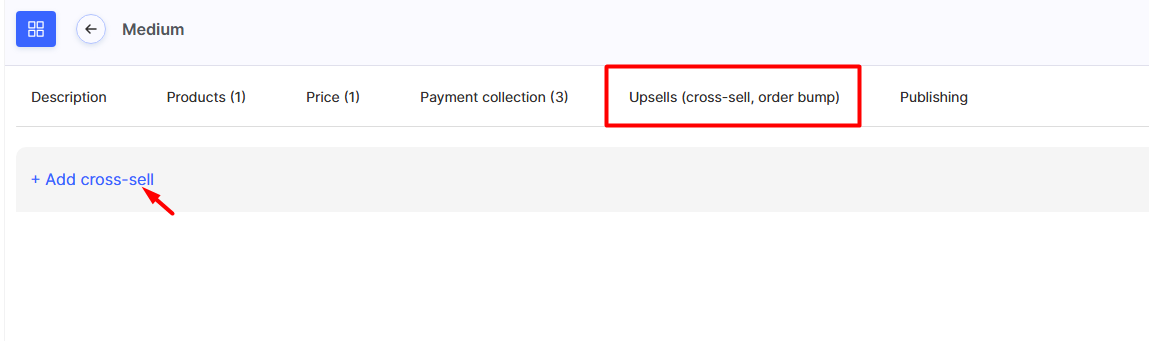
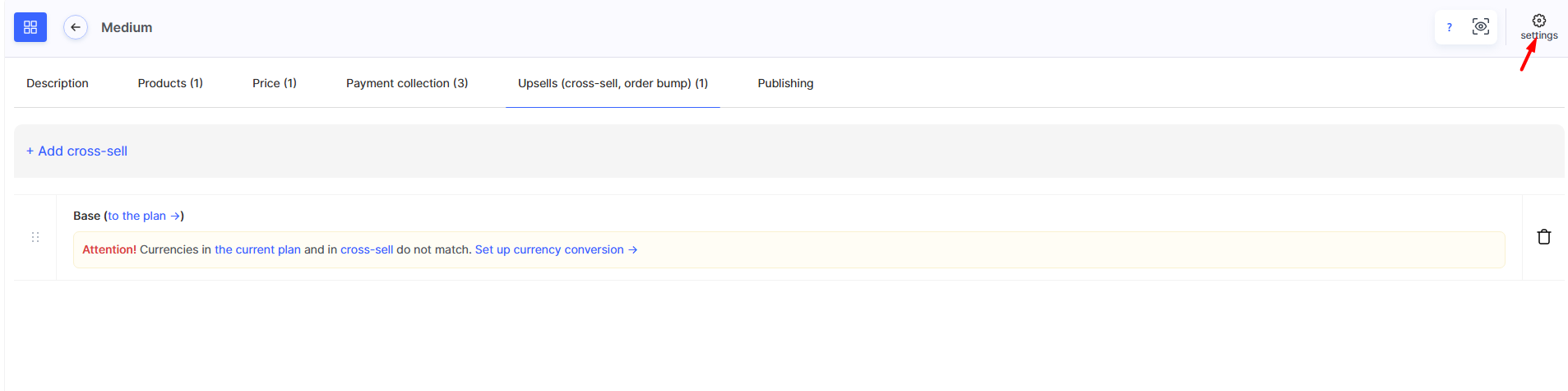
Cross-sell refers to other pricing plans or products that may interest students when purchasing the current pricing plan: an additional plan, a consultation, or access to another course. If this is your first pricing plan or you have only one product, you can skip this section.
To add an additional offer, click Add Cross-Sell and select the desired pricing plan from the list.
If the currency of the cross-sell pricing plan differs from that of the main pricing plan, the platform will display a warning and suggest configuring currency conversion.
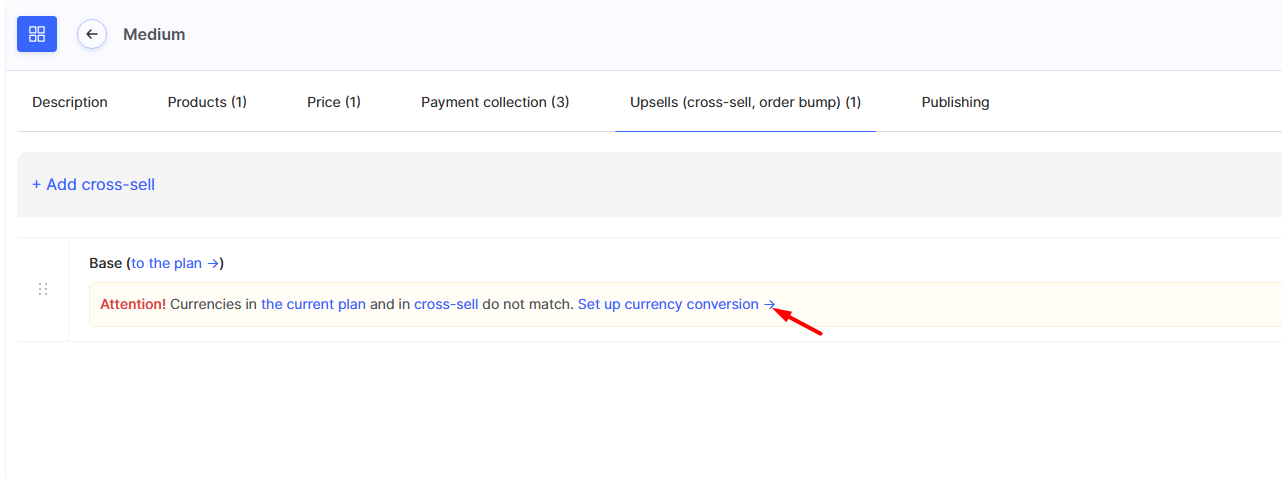
Currency Conversion Using Public Exchange Rate Services means that the exchange rate provided by specialized public services will be used at the time of payment — keep in mind that the suggested rate is approximate, as the exact amount charged is determined by the payment system's exchange rate at the time of payment. You can also set your own fixed exchange rate.
For more information about configuring additional sales, see the article How to Create Cross-Sell Offers in Kwiga
Automatic Emails to Students
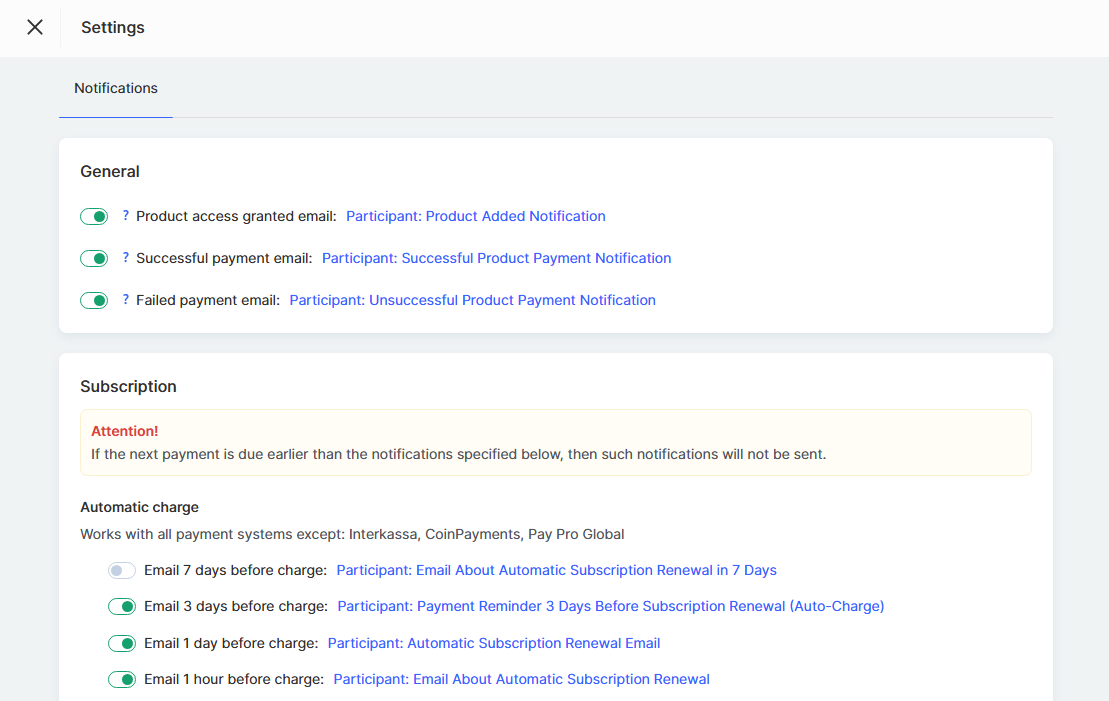
In the upper-right corner of the pricing plan editor, there is a Settings button — here, you can disable or configure automatic emails that the platform sends to students at different stages of the payment process.
The General section contains the main notifications applicable to any pricing plan. The product access notification email is sent to participants after their access to the course is activated. The successful payment email confirms the payment and access to the materials. The failed payment email informs students about a payment issue. Each notification can be disabled using a separate toggle, or you can open its template for editing using the corresponding link.
If the pricing plan uses Subscription payments, an additional Subscription section appears with reminder emails about upcoming payments.
For Automatic Payments (supported by all payment systems except Interkassa, CoinPayments, and Pay Pro Global), you can enable reminder emails 7 days, 3 days, 1 day, and 1 hour before the payment is charged.
For Manual Payments, when customers need to confirm the payment themselves, similar reminders are available 7 days, 3 days, 1 day, and 1 hour before the subscription expires.
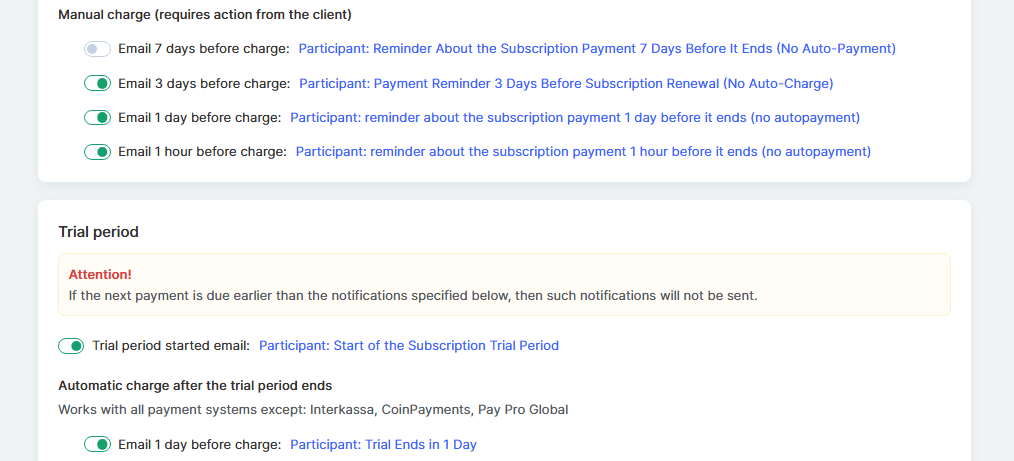
Important! If the next payment is scheduled to occur sooner than the specified notification intervals, these emails will simply not be sent.
If a Trial Period is configured for the pricing plan, another section appears with the corresponding emails. The trial period start notification is sent immediately after the trial begins. In the Automatic Payments section, after the trial period ends (also supported by all payment systems except Interkassa, CoinPayments, and Pay Pro Global), you can enable reminders 1 day and 1 hour before the first payment is charged after the trial period.
Each email in this section can be edited individually — click the blue link next to the notification name to customize the text according to your needs.
Sales Funnel and Pricing Plan Publication
On the Publication tab, you can see which sales funnel the pricing plan is linked to.
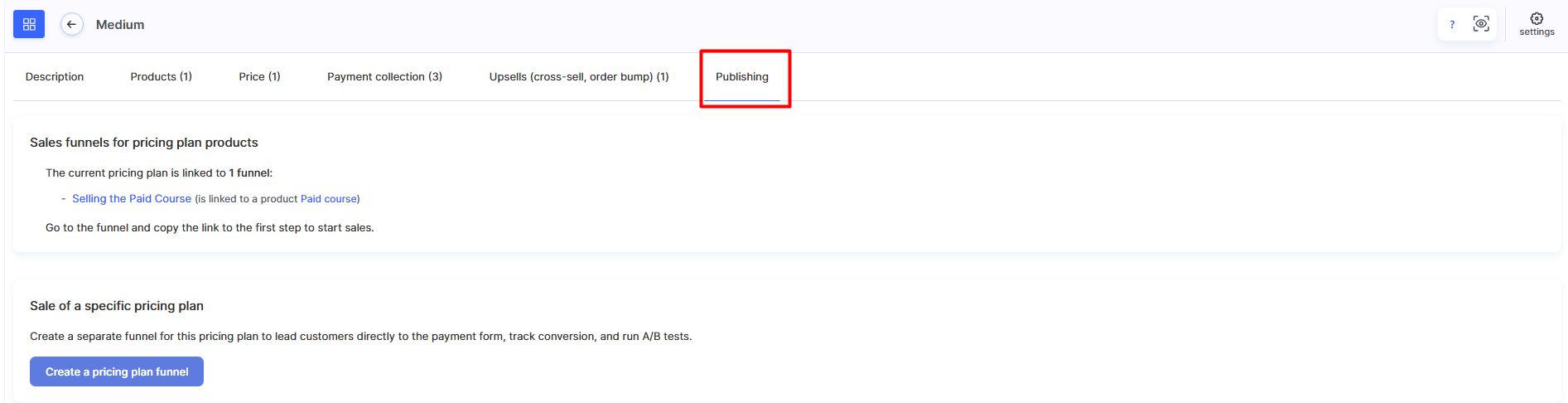
When you create a pricing plan, the platform automatically generates a system sales funnel — a sequence of pages, from the order form to the thank-you page, that students go through when making a purchase. This funnel is displayed in the Sales Funnels for Pricing Plan Products section, along with a link to the associated product.
To start selling the pricing plan, open the funnel and copy the link to its first step (the order form).
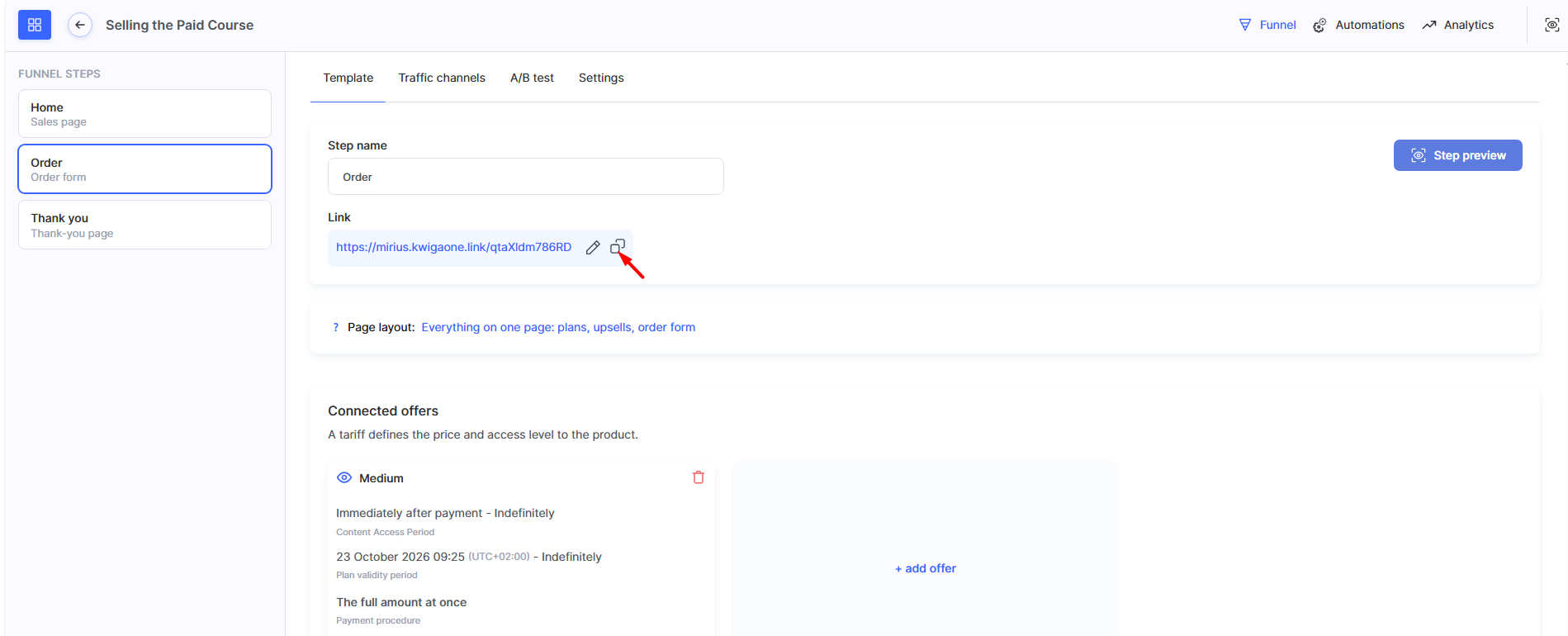
If you need to direct customers to a separate payment page, run A/B tests, or track conversions independently of the product's main funnel, click «Create Pricing Plan Funnel» in the «Sell a Specific Pricing Plan» section. This will create a separate funnel specifically for this pricing plan, with its own links for each step.
For more information about working with sales funnels, see the article Sales Funnels: General Information.
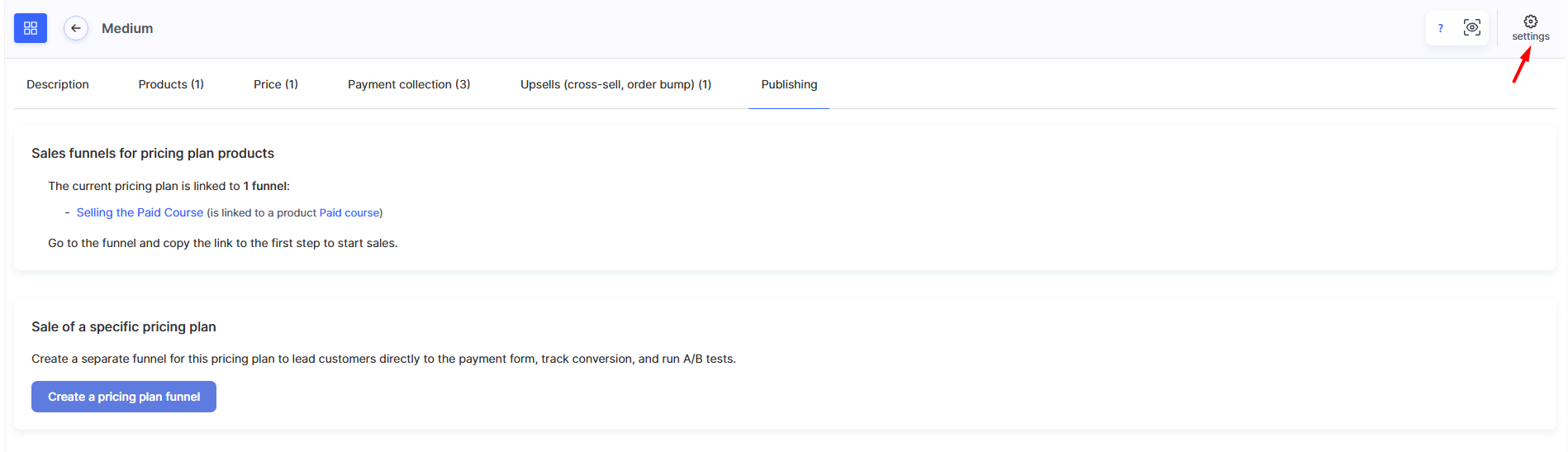
Once you have completed all the tabs — description, products, price, payment method, additional sales, and publication — your pricing plan is ready for sale. Check the link to the first step of the funnel, make sure the payment system is connected and the price is set correctly, and you can start selling.
If you plan to create multiple pricing plans for one course, see the article Creating Multiple Pricing Plans.
Didn't find the answer? Contact the support service via online chat or Telegram